
admin
Finding the Best Water Softener for Well Water in 2025: The Ultimate Guide

Unlock the Secret to Pure, Soft Well Water
- Discover the best water softener for your well, ensuring pristine water quality.
- Learn how to effectively combat hard water issues and their consequences.
- Save money and time by choosing the right softener for your needs.
- Improve the lifespan of your appliances and plumbing system.
- Enjoy the benefits of soft water for healthier skin and hair.
If you’re on a well, you know the struggle firsthand. The stubborn rust stains in your sinks, the scale clogging your showerheads, the soap that just won’t lather, and that faint metallic taste in your water. You’re not just looking for *a* water softener—you’re searching for a reliable solution specifically designed to tackle the unique challenges of well water. You want to protect your home, your appliances, and your family’s comfort.
This guide is designed to cut through the confusion. We’ll help you understand what makes well water different, what to look for in a softener, and review some of the top systems to fit any budget and need.
Why Well Water Needs Special Attention
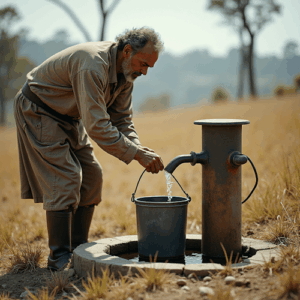
Municipal water is treated and regulated. Well water is straight from the ground, and its composition is unique to your property. This means it often contains more than just the calcium and magnesium that cause standard “hardness.”
- High Iron Content: Causes reddish-brown stains on fixtures and laundry. It can also foul the resin bed in a standard softener, ruining it.
- Manganese: Similar to iron, it causes dark brown or black staining and is often present alongside it.
- Hydrogen Sulfide: That infamous “rotten egg” smell that can make your entire home’s water unpleasant.
- Sediment & Turbidity: Fine dirt, sand, or clay particles that can cloud your water and damage appliances.
A standard water softener bought off the shelf for city water will likely fail against these contaminants. You need a system built for the job.
Key Features to Look For in a Well Water Softener
- Iron-Specific Resin: The heart of the softener. Look for a resin that is specifically designed or treated to remove iron and manganese in addition to hardness minerals. This prevents “iron fouling” and extends the system’s life.
- High-Efficiency Control Valve: A quality valve (like Fleck or Clack) is the brain of the operation. It ensures accurate regeneration cycles, minimizes salt and water waste, and offers reliability for years to come.
- Gravel & Carbon Layer (or Upflow Brining): Some premium well water softeners include a layer of gravel beneath the resin to prevent clogging from sediment. Others use an “upflow” brining process during regeneration to better clean iron from the resin.
- Twin-Tank (Alternating) Design: For larger households or very hard water, a twin-tank system ensures you never have a moment of hard water. While one tank is in service, the other is on standby or regenerating. This is the ultimate solution for uninterrupted soft water.
- Pre-Filtration is Key: Often, the best solution isn’t just a softener. A sediment filter before the softener is almost mandatory for well water to protect the softener’s valve. For high iron or sulfur, a dedicated iron filter may be necessary ahead of the softening system.
Top Water Softeners for Well Water in 2025
Here are our top picks, categorized to meet different needs and budgets.
- For the DIY Homeowner on a Budget: SpringWell WS Salt-Based Softener
- Best For: Those who need an effective, all-in-one solution without professional installation fees.
- Why It’s Great: The SpringWell WS is designed with well water in mind. It features a high-capacity resin that handles moderate levels of iron (up to 7 ppm) in addition to hardness. It uses a reliable Fleck 5600SXT digital control head, which is famous for its durability and user-friendly programming. It’s a fantastic value that doesn’t cut corners where it counts.
- Considerations: For very high iron or sulfur, you may need to pair it with a separate pre-filter.
- For Eco-Conscious Homeowners: Aquasana Whole House Well Water Filter & Softener
- Best For: Homeowners looking to reduce salt usage and environmental impact while solving multiple problems.
- Why It’s Great: Aquasana’s unique approach uses a salt-free conditioner (to prevent scale) paired with a massive activated carbon and KDF filter to remove chlorine, iron, hydrogen sulfide, pesticides, and other contaminants. It’s a brilliant alternative for those who cannot or prefer not to use a traditional salt-based system.
- Considerations: This is not a true “softener” in the traditional sense—it conditions water to prevent scale but does not remove hardness minerals. It excels at filtering a wide range of other well water contaminants.
- For Challenging Water & Luxury Performance: Tier1 Essential Series Dual-Tank Softener
- Best For: Large homes with high water usage, very hard water, or persistent iron problems.
- Why It’s Great: This is a professional-grade, twin-tank system. Its alternating design means you have zero downtime—you’ll always have soft water, even during regeneration. Built with a premium Fleck control valve and robust fiberglass tanks, it’s engineered to handle the toughest well water conditions for decades. It’s the ultimate “set it and forget it” solution for total peace of mind.
- Considerations: This is a premium investment with a higher upfront cost, but it delivers unmatched performance and reliability.
Before You Buy: Your Essential Pre-Purchase Checklist
- Test Your Water! This is non-negotiable. You must know your enemy. Use a professional lab test or a highly-rated home test kit to get accurate levels of:
- Total Hardness (in grains per gallon – GPG)
- Iron (ppm)
- Manganese (ppm)
- pH
- Total Dissolved Solids (TDS)
- Calculate Your Grain Capacity. Determine your household’s daily water usage (number of people x 75-80 gallons per day). Multiply your water hardness (GPG) by your daily usage to find the grains of hardness that need to be removed each day. This will tell you what capacity system you need.
- Plan for Installation. Consider space (where it will go, near a drain and power outlet), plumbing connections, and whether you’ll DIY or hire a professional.
- Factor in Maintenance. All softeners require maintenance: topping up with salt (for salt-based systems), occasional resin bed replacement (every 10-15 years), and potentially replacing pre-filters every few months.
Salt-Based vs. Salt-Free: A Quick Primer
- Salt-Based (Ion Exchange): The most effective method for truly removing hardness and iron minerals. Requires salt and a drain for regeneration. Provides the highest quality soft water for entire home use.
- Salt-Free (Template Assisted Crystallization – TAC): Doesn’t remove minerals but crystallizes them so they can’t stick to surfaces. Good for scale prevention but does not help with soap scum, skin irritation, or iron stains. Often paired with filtration for well water.
Final Recommendation
For most well water users, a salt-based softener with an iron-removing resin and a Fleck or Clack control valve is the most effective and reliable solution. It directly addresses the core problems of hardness, staining, and scaling.
For the best overall value and performance, we recommend the SpringWell WS Softener. It’s purpose-built for well water, boasts a top-tier control valve, and offers exceptional performance for its price point.
Investing in the right water softener will end the frustration of stains, scale, and bad water. You’ll protect your plumbing and appliances, save money on soaps and energy bills, and finally enjoy the clean, soft, refreshing water your home deserves.
Disclaimer: Always get a professional water test to confirm your specific well water conditions before purchasing any treatment system. This article is for informational purposes and reflects a general consensus based on typical well water scenarios.
Recommended Reading
SpringWell FutureSoft Salt-Free Water Softener Review: Does It Really Work?
Unlock Softer, Healthier Water Without the Salt! Discover if the SpringWell FutureSoft Salt-Free Water Softener lives up to its claims. Learn about the technology behind salt-free water softening and how it works. Understand the pros and cons of salt-free water softeners compared to traditional systems. Find out if a salt-free water softener is the right […]
The Ultimate Guide to Choosing the Right Size Water Softener
Unlock the Secret to Perfect Soft Water Determine the ideal water softener size for your home. Learn how to calculate your home’s water usage for accurate sizing. Understand different softener types and their benefits. Avoid common mistakes when choosing a water softener. Master the art of selecting a water softener that perfectly fits your needs […]
The Truth About Salt-Free Water Softeners: Pros and Cons
Unlock the Truth About Salt-Free Water Softeners Discover the pros and cons of salt-free water softener systems. Learn how salt-free softeners work and their effectiveness. Understand if a salt-free system is the right choice for your home. Explore the environmental impact and cost-effectiveness of salt-free options. Compare salt-free softeners to traditional salt-based systems. When it […]
How to Test Your Water Hardness at Home
Unlock the Secrets of Your Water: Learn to Test Hardness at Home Easily understand water hardness and its impact on your home. Master simple, at-home water hardness testing methods. Learn to interpret your results and take informed actions. Discover how to improve your water quality and protect appliances. Save money and time by avoiding costly […]
SpringWell FutureSoft Salt-Free Water Softener Review: Does It Really Work?
Unlock Softer, Healthier Water Without the Salt!
- Discover if the SpringWell FutureSoft Salt-Free Water Softener lives up to its claims.
- Learn about the technology behind salt-free water softening and how it works.
- Understand the pros and cons of salt-free water softeners compared to traditional systems.
- Find out if a salt-free water softener is the right solution for your home and budget.
- Explore real user reviews and experiences with the SpringWell FutureSoft model.
Hard water can be a daily frustration—leaving white spots on dishes, clogging showerheads, stiffening laundry, and damaging appliances over time. Beyond surface-level annoyances, it also causes scale buildup in pipes, reduces water pressure, and shortens the lifespan of water heaters and dishwashers.
Traditionally, the fix has been a salt-based water softener, which removes minerals like calcium and magnesium through ion exchange. While effective, these systems bring challenges: constant salt refills, wastewater from regeneration cycles, added sodium in water, and ongoing maintenance.
This is where salt-free water conditioners like the SpringWell FutureSoft Salt-Free Water Softener come in. Instead of removing minerals, they prevent them from sticking and forming scale. The question is: does it really work? Let’s break it down.
SpringWell FutureSoft Salt-Free Water Softener Review |
||
Salt-Free Operation |
Reduced Environmental Impact |
Improved Water Quality |
| The SpringWell FutureSoft uses a unique filtration process to soften water without the need for salt, making it a more environmentally friendly option. | Eliminating salt use significantly reduces the environmental impact associated with traditional water softener systems and their disposal. | The system effectively reduces water hardness, improving the quality and feel of your water for showering, cleaning, and drinking. |
Cost Savings |
Easy Installation and Maintenance |
Effectiveness Varies |
| While the initial cost might be higher, the absence of salt refills leads to long-term cost savings compared to traditional softeners. | The system is designed for relatively easy installation and requires minimal maintenance, reducing the need for professional services. | The effectiveness of salt-free water softeners can vary depending on water conditions. It may not be suitable for all hard water situations. |
Improved Appliance Lifespan |
||
| Softer water can help protect your appliances and plumbing from the damaging effects of hard water, extending their lifespan. | ||
How the SpringWell FutureSoft Works
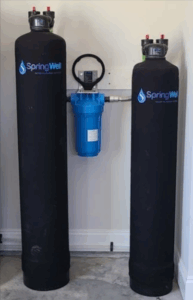 Unlike salt-based softeners, the SpringWell FutureSoft is a conditioner, not a traditional softener.
Key Features
-
Template Assisted Crystallization (TAC) Technology
Transforms hardness minerals (calcium and magnesium) into crystal-like structures that don’t stick to surfaces. The minerals stay in your water but no longer form damaging scale. -
No Salt, No Chemicals, No Wastewater
Operates without salt refills or regeneration cycles, saving water and avoiding added sodium. -
Protects Appliances and Plumbing
Prevents buildup in water heaters, dishwashers, washing machines, and pipes, keeping them efficient. -
Whole-House Coverage
Treats all incoming water, so you benefit from scale protection in showers, kitchens, and laundry. -
Minimal Maintenance
Only requires replacing a sediment pre-filter every 6–9 months (depending on water quality).
Quick Comparison
| Feature | Traditional Salt-Based Softener | SpringWell FutureSoft |
|---|---|---|
| Removes minerals | ✅ Yes | ❌ No (changes structure) |
| Requires salt | ✅ Yes | ❌ No |
| Wastewater during regeneration | ✅ Yes | ❌ No |
| Maintenance level | High | Low |
| Adds sodium to water | ✅ Yes | ❌ No |
| Prevents scale buildup | ✅ Yes | ✅ Yes |
| Environmental impact | Higher | Lower |
Real-World Benefits
So how does it perform in daily use? Here are the most reported experiences and results.
Cleaner Dishes and Fixtures
Users report fewer white spots on dishes, glasses, and faucets. Shower doors stay clearer longer without heavy scrubbing.
Softer Skin and Hair
While minerals remain in the water, the lack of residue means less dryness and irritation on skin, and hair feels softer and more manageable.
Extended Appliance Lifespan
By preventing scale, appliances like dishwashers, washing machines, and especially water heaters last longer and work more efficiently.
Eco-Friendly and Health Benefits
No wastewater, no added sodium, and no harmful chemicals. Ideal for eco-conscious households and areas where salt-based systems are restricted.
Minimal Maintenance
No heavy salt bags, no messy regeneration cycles. Just a quick filter swap a couple of times a year.
Realistic Expectations
The water won’t feel “silky soft” like with a salt-based system since minerals are still present. However, scale prevention—the main problem—works effectively.
Reported Benefits Summary:
-
Noticeable reduction in scale
-
Appliances run more efficiently
-
Softer laundry without stiffness
-
Less skin irritation
-
Zero salt hassle
-
No loss in water pressure
Is the SpringWell FutureSoft Worth It?
The answer depends on your priorities.
Cost vs. Value
While the upfront cost is higher, long-term savings come from:
-
No salt purchases
-
No wastewater disposal
-
Fewer plumbing repairs
-
Extended appliance lifespan
Maintenance Convenience
If you don’t want the hassle of salt refills, this system is a nearly maintenance-free option.
Eco-Friendly Choice
Perfect for regions with salt-based softener restrictions or for families who prioritize sustainability.
Effectiveness Against Scale
If scale is your biggest issue, the FutureSoft delivers. If you want the silky texture of salt-softened water, it may fall short.
Pros and Cons
| Pros | Cons |
|---|---|
| No salt or chemicals | Higher upfront cost |
| No wastewater | Doesn’t remove minerals |
| Low maintenance | Doesn’t create silky-soft feel |
| Eco-friendly | Requires installation |
| Protects appliances & pipes | Works best under 81 grains hardness |
| Long lifespan |
Final Verdict
The SpringWell FutureSoft Salt-Free Water Softener isn’t a traditional softener—but it does deliver on its promises. It’s an excellent choice for families who:
-
Want to prevent scale buildup
-
Prefer low-maintenance solutions
-
Value eco-friendly technology
-
Live in regions where salt-based systems are restricted
It won’t give you the “classic soft water feel,” but for scale prevention, appliance protection, and convenience, it’s a smart, long-term investment.
Conclusion
The SpringWell FutureSoft proves that salt-free systems are more than marketing hype. While it doesn’t strip minerals from your water, it prevents them from damaging your home. That means cleaner dishes, healthier plumbing, longer-lasting appliances, and less hassle—all without the drawbacks of salt-based systems.
👉 If your top priority is scale prevention and eco-friendly convenience, the SpringWell FutureSoft is worth every penny.
Top 10 Benefits of Using a Water Softener in Your Home
Unlock the 10 Amazing Benefits of a Water Softener
- Say goodbye to hard water stains and enjoy sparkling clean surfaces.
- Protect your plumbing system and appliances from damage caused by hard water.
- Experience softer, healthier-looking skin and hair.
- Enjoy cleaner, brighter laundry without the need for harsh chemicals.
- Reduce the amount of soap and detergent required for cleaning.
- Improve the taste and quality of your drinking water.
- Save money on costly plumbing repairs and replacements.
- Extend the lifespan of your water-using appliances.
- Breathe easier with cleaner, healthier air in your home.
Hard water is a common issue in many households. It leaves behind spots on dishes, clogs pipes with mineral buildup, and can even affect the way your skin and hair feel after a shower. A water softener is one of the most practical and long-term solutions to these problems. By removing excess calcium and magnesium and replacing them with sodium or potassium, it delivers softer, cleaner water that transforms daily life.
In this article, we’ll explore the top benefits of using a water softener at home, divided into four main sections:
-
Understanding water softeners
-
Health and lifestyle benefits
-
Home and appliance improvements
-
Financial savings and long-term value
Understanding Water Softeners and Hard Water

Before diving into the benefits, it’s important to understand why hard water causes problems.
Hard water contains high concentrations of minerals like calcium and magnesium. While not harmful to health, they cause:
-
White spots on dishes and glassware
-
Soap scum in showers and sinks
-
Reduced efficiency in appliances
-
Dry skin and dull hair
Water softeners use ion exchange to replace those minerals with sodium or potassium, making the water gentle on your skin, appliances, and plumbing.
Here’s a quick comparison:
| Feature | Hard Water | Soft Water |
|---|---|---|
| Mineral Content | High in calcium & magnesium | Low in calcium & magnesium |
| Soap & Detergent | Requires more, leaves residue | Lathers easily, needs less |
| Appliance Lifespan | Reduced due to scale buildup | Extended due to fewer deposits |
| Skin & Hair | Dry, itchy, hard to manage | Smooth, moisturized, shiny |
| Plumbing | Prone to clogging | Clear and efficient flow |
Health and Lifestyle Benefits of Soft Water
Installing a water softener impacts your everyday comfort and hygiene.
1. Better Showers and Softer Skin
Hard water strips away natural oils, leaving skin dry. Soft water helps soap rinse off easily, leaving skin smooth and hydrated.
2. Healthier, Shinier Hair
Hard water minerals coat the hair, making shampoo less effective. With soft water, hair looks shinier, feels softer, and is easier to manage.
3. Cleaner and Softer Clothes
Laundry done with soft water comes out brighter and softer. Detergents dissolve better, preventing residue on fabrics and extending their lifespan.
4. Easier Household Cleaning
No more constant scrubbing of soap scum or water spots. With soft water, sinks, bathtubs, and dishes stay cleaner for longer, saving time and effort.
Quick Lifestyle Benefits Recap:
-
Softer skin and reduced irritation
-
Shinier, healthier hair
-
Cleaner, brighter laundry
-
Less scrubbing and fewer stains
Home and Appliance Improvements
Soft water doesn’t just improve comfort—it protects your home.
5. Protects Plumbing and Pipes
Hard water deposits clog pipes, reducing water pressure. Soft water prevents buildup, extending plumbing lifespan.
6. Extends Appliance Lifespan
Dishwashers, washing machines, and water heaters all work more efficiently with soft water, avoiding scale damage.
7. Improves Water Heater Efficiency
Hard water creates sediment in heaters, forcing them to use more energy. Soft water keeps them clean and efficient.
8. Spot-Free Dishes and Glassware
Say goodbye to streaks and cloudy glasses. Soft water ensures dishes come out sparkling after every wash.
| Appliance | Effect of Hard Water | Effect of Soft Water |
|---|---|---|
| Dishwasher | Scale buildup, cloudy dishes | Longer life, spotless dishes |
| Washing Machine | Stiff laundry, dull fabrics | Softer clothes, brighter colors |
| Water Heater | Sediment, higher energy bills | Efficient heating, lower costs |
| Plumbing | Clogs, reduced water flow | Clear pipes, fewer repairs |
Financial Savings and Long-Term Value
Although a water softener requires an upfront investment, it pays for itself over time.
9. Lower Energy Bills
With a clean, efficient water heater, energy use drops significantly.
10. Reduced Household Costs
-
Use less soap, shampoo, and detergent
-
Fewer plumbing repairs
-
Appliances last longer
-
Boosted home resale value
Where the Savings Come From:
-
Reduced energy bills
-
Lower cleaning product costs
-
Less frequent appliance replacements
-
Avoided plumbing repairs
-
Higher property value
Conclusion
A water softener is more than just a luxury—it’s an investment in your home and your well-being. From healthier skin and hair to longer-lasting appliances and real cost savings, the benefits cover nearly every aspect of daily life.
In summary, the top benefits of using a water softener are:
-
Improved lifestyle through comfort and cleanliness
-
Protection for plumbing and appliances
-
Long-term financial savings
-
Added property value
Once you make the switch, you’ll wonder how you ever managed without it.
Recommended Reading
How to Tell If Your Home Needs a Water Softener
Is Your Home Water Hard? Learn the Signs and Benefits of Softening! Identify the key indicators of hard water in your home. Understand the long-term advantages of using a water softener. Discover how soft water can improve your appliances’ lifespan. Learn how to maintain soft water for optimal home comfort. Explore various types of water […]
How to Save Money on Water Softener Salt Without Sacrificing Quality
Is Your Home Water Hard? Learn the Signs and Benefits of Softening! Identify the key indicators of hard water in your home. Understand the long-term advantages of using a water softener. Discover how soft water can improve your appliances’ lifespan. Learn how to maintain soft water for optimal home comfort. Explore various types of water […]
Common Water Softener Problems and How to Fix Them
Solve Your Water Softener Woes! Identify and troubleshoot common water softener problems. Learn easy DIY solutions to save money on costly repairs. Master simple maintenance to keep your system running smoothly. Extend the lifespan of your water softener. Enjoy the benefits of consistently soft water. Water softeners are one of those household systems you don’t […]
Best Portable Water Softeners for RVs and Camping in 2025 — Which One Fits Your Rig?
Upgrade Your RV Water: The Ultimate Guide to Portable Water Softeners Discover the best portable water softeners for RVs and camping in 2025. Learn how to choose the perfect softener for your specific RV and camping needs. Enjoy softer, cleaner water for drinking, showering, and cooking. Say goodbye to hard water stains and scale buildup […]
The Truth About Salt-Free Water Softeners: Pros and Cons
Unlock the Truth About Salt-Free Water Softeners
- Discover the pros and cons of salt-free water softener systems.
- Learn how salt-free softeners work and their effectiveness.
- Understand if a salt-free system is the right choice for your home.
- Explore the environmental impact and cost-effectiveness of salt-free options.
- Compare salt-free softeners to traditional salt-based systems.
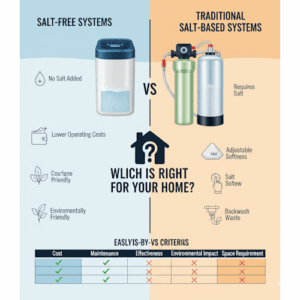 When it comes to improving water quality at home, one of the most debated topics is whether salt-free water softeners are worth the investment. For decades, traditional salt-based water softeners dominated the market, and they’re still widely used. But in recent years, salt-free alternatives have grown in popularity, marketed as eco-friendly, low-maintenance, and a healthier choice for families.
However, there’s a lot of confusion surrounding how they actually work. Some homeowners believe salt-free systems are simply better versions of salt-based ones, while others worry they don’t really “soften” water at all. If you’ve been wondering about the truth behind salt-free water softeners, their pros and cons, and whether they fit your household needs, this guide will break it down in simple, straightforward terms.
We’ll look at how these systems function, their advantages, their drawbacks, and whether they’re the right choice for you.
How Salt-Free Water Softeners Work
To understand the real differences, let’s start with how traditional softeners work. Salt-based water softeners remove hardness minerals—mainly calcium and magnesium—through a process called ion exchange. In short, they swap the hardness minerals for sodium (or sometimes potassium), leaving behind soft water that prevents scale buildup.
Salt-free systems, on the other hand, don’t actually remove hardness minerals. Instead, most rely on a process called Template Assisted Crystallization (TAC). In TAC, special media inside the system changes the structure of the calcium and magnesium ions so they don’t stick to surfaces like pipes, faucets, or appliances.
This means:
- The minerals are still in the water, but they’re neutralized.
- You won’t see the same kind of scale buildup, but your water technically isn’t “soft.”
- There’s no brine discharge, no need to add bags of salt, and much less maintenance.
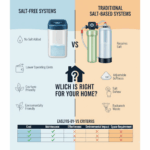
Here’s a quick comparison to highlight the main differences:
| Feature | Salt-Based Softeners | Salt-Free Softeners |
| Process | Removes hardness minerals (ion exchange) | Conditions minerals (TAC or other methods) |
| Water Result | Soft water | Conditioned water (not technically soft) |
| Maintenance | Regular salt refills and cleaning | Minimal maintenance |
| Environmental Impact | Produces brine waste | Eco-friendly, no discharge |
| Cost | Medium upfront + ongoing salt cost | Higher upfront, lower ongoing cost |
So, while both systems deal with hard water, they do so in completely different ways. Salt-free units should be thought of as water conditioners rather than softeners in the traditional sense.
The Pros of Salt-Free Water Softeners
For many households, salt-free water conditioners offer clear benefits that make them appealing. Here are the top advantages you should know:
Low Maintenance
One of the biggest selling points is convenience. Unlike salt-based softeners, you won’t be hauling 40-pound salt bags into your basement or garage every month. The media inside a salt-free system can last years before replacement is needed.
Eco-Friendly Option
Since there’s no salt brine discharged into the environment, these systems are often chosen in areas where traditional softeners are restricted due to wastewater regulations. They also waste far less water during their operation.
Keeps Healthy Minerals in Water
Calcium and magnesium may cause hard water issues, but they’re also essential minerals for health. Because salt-free systems don’t remove them, your drinking water retains its natural mineral balance. Some people prefer this since the water tastes more natural.
Longer Appliance Lifespan
Even though the minerals remain, their crystallized form won’t cling to pipes and heating elements. This helps protect dishwashers, water heaters, and washing machines from scale damage, improving efficiency and extending their lifespan.
No Slippery Feel
Anyone who has used a salt-based softener knows the “slippery” or “silky” feel it leaves on skin after showering. With salt-free systems, that doesn’t happen since minerals are not removed, only conditioned. Many people prefer this more natural feel.
Lower Operating Costs Over Time
Although the upfront cost can be higher, the fact that you’re not constantly buying salt, dealing with high water waste, or performing frequent maintenance means you may save more in the long run.
In short: Salt-free systems provide a convenient, environmentally conscious, and health-friendly way to tackle the problems caused by hard water without the hassle of traditional softeners.
The Cons of Salt-Free Water Softeners
While salt-free water conditioners have benefits, they’re not perfect for every household. Before you invest in one, it’s important to consider the downsides:
They Don’t Truly Soften Water
This is the number one drawback. Because they don’t actually remove hardness minerals, water isn’t technically softened. If you’re expecting that slippery-skin feeling or completely scale-free showers, you may be disappointed.
Limited Effectiveness with Extremely Hard Water
In areas with very hard water (over 25 grains per gallon), salt-free systems may not perform as effectively. Scale prevention is reduced, and you may still notice buildup over time. In such cases, a salt-based system is often the better solution.
Higher Initial Cost
Salt-free conditioners typically cost more upfront compared to standard softeners. While they save on maintenance costs in the long run, the initial investment can be a barrier for some homeowners.
Won’t Remove Existing Scale
Another key drawback is that they won’t eliminate scale already present in your plumbing system. Salt-based softeners can slowly help reduce existing buildup, but salt-free units only prevent new deposits from forming.
May Not Work Well for Large Families
Since they don’t reduce mineral content, households with high water consumption and very hard water may feel less of an impact from a salt-free unit. The conditioning process can be less noticeable when water demand is very high.
Here’s a quick breakdown of these limitations:
| Drawback | Impact |
| Not true softening | Minerals remain in water |
| Limited in very hard water | Less effective beyond 25 gpg hardness |
| High upfront price | May cost more than salt-based initially |
| Doesn’t remove old scale | Only prevents new buildup |
| Less effective for heavy use | High demand households may notice less benefit |
In short: Salt-free systems are excellent for scale prevention, but if you want completely softened water or have extremely hard water, they may not meet expectations.
Choosing the Right Option for Your Home
Deciding between a salt-free and a salt-based water softener depends on your household’s unique needs, water quality, and lifestyle. Here are some key factors to help guide your decision:
Consider Your Water Hardness Level
- If your water is moderately hard, a salt-free system can work well for prevention.
- If your water is extremely hard, a traditional salt-based softener may be necessary.
Think About Maintenance
- Don’t want the hassle of refilling salt and dealing with messy brine? Go salt-free.
- Don’t mind regular upkeep for guaranteed soft water? A salt-based option works.
Check Local Regulations
- In some regions, salt-based softeners are restricted due to brine discharge. In that case, salt-free may be your only choice.
Factor in Health Preferences
- If you want water that retains beneficial minerals, a salt-free unit is better.
- If you prefer the feel and cleaning benefits of softened water, salt-based wins.
Budget Considerations
- Salt-free: higher upfront but fewer ongoing costs.
- Salt-based: lower upfront but recurring expenses for salt and maintenance.
Here’s a side-by-side summary to help you decide:
| Factor | Salt-Based | Salt-Free |
| Best for hardness levels | Very high hardness | Moderate hardness |
| Maintenance | Regular salt refills | Minimal |
| Environmental impact | Brine discharge | Eco-friendly |
| Health/minerals | Removes calcium & magnesium | Keeps minerals |
| Upfront cost | Lower | Higher |
| Long-term cost | Higher | Lower |
Practical Example:
- A small household in a city with moderate hardness and environmental restrictions might find a salt-free system the perfect fit.
- A large rural family with extremely hard water might need a traditional salt-based softener to avoid scale problems.
Conclusion
The truth about salt-free water softeners is that they aren’t actually “softeners” in the traditional sense. Instead, they’re water conditioners that prevent scale without removing hardness minerals. This distinction is key to understanding whether they’re right for you.
Pros: They’re low-maintenance, eco-friendly, and retain healthy minerals in drinking water while protecting your appliances.
Cons: They don’t actually soften water, may not perform well in areas with very high hardness, and cost more upfront.
Ultimately, choosing between a salt-free and a salt-based water treatment system depends on your water hardness, lifestyle, budget, and environmental concerns. Both have their place, but they solve the problem of hard water in different ways.
If you’re after convenience, lower environmental impact, and scale prevention without the hassle of salt, then a salt-free system could be the perfect match. But if you need true softened water for extremely hard conditions, a salt-based system remains the most effective solution.
By weighing the pros and cons carefully, you’ll be able to make the best choice for your home, your family, and your long-term comfort.
Recommended Reading
Finding the Best Water Softener for Well Water in 2025: The Ultimate Guide
Unlock the Secret to Pure, Soft Well Water Discover the best water softener for your well, ensuring pristine water quality. Learn how to effectively combat hard water issues and their consequences. Save money and time by choosing the right softener for your needs. Improve the lifespan of your appliances and plumbing system. Enjoy the benefits […]
Water Softener Myths Debunked: What You Really Need to Know
Debunk Water Softener Myths & Transform Your Home Learn the truth about common water softener myths. Discover the real benefits of soft water for your home. Understand which water softener is right for your needs. Save money and improve your water quality. Protect your appliances and plumbing system. When it comes to water softeners, there’s […]
The Ultimate Guide to Choosing the Right Size Water Softener
Unlock the Secret to Perfect Soft Water
- Determine the ideal water softener size for your home.
- Learn how to calculate your home’s water usage for accurate sizing.
- Understand different softener types and their benefits.
- Avoid common mistakes when choosing a water softener.
- Master the art of selecting a water softener that perfectly fits your needs and budget.
When it comes to improving the quality of water in your home, choosing the right size water softener is one of the most important steps. A water softener that’s too small won’t keep up with your household’s demand, while one that’s too large can lead to unnecessary costs and inefficiency. The good news is, figuring out the right size doesn’t have to be complicated. With a little understanding of how water softeners work and what factors matter most, you can make a confident decision that will serve your family well for years.
In this guide, we’ll break everything down in plain language, with practical examples, lists, and tables that make it easy to follow. We’ll also walk through the key factors to consider, how to calculate your needs, and what mistakes to avoid. By the end, you’ll have a clear picture of how to choose the right size water softener for your home.
Understanding How Water Softeners Work
Before diving into sizing, it helps to understand the basics of how a water softener actually works. At its core, a water softener’s job is to remove minerals—mostly calcium and magnesium—that cause water hardness. Hard water can leave spots on dishes, dry out your skin, make soap less effective, and shorten the life of appliances like dishwashers and water heaters.
Here’s a simple breakdown:
- Resin beads inside the softener trap hardness minerals when water passes through.
- Regeneration is the process of cleaning those beads with a salt solution (brine).
- Once regenerated, the softener is ready to keep removing minerals again.
The “size” of a water softener refers to its capacity—the amount of hardness it can remove before it needs to regenerate. That’s why choosing the right size is so important. If the capacity is too small, the unit will regenerate too often and wear out faster. If it’s too large, you’ll waste water, salt, and money.
Key Terms to Know
- Grains per gallon (GPG): A measurement of water hardness.
- Capacity (in grains): How many grains of hardness the softener can remove before regenerating.
- Regeneration cycle: How often the softener cleans itself and resets.
- Salt efficiency: How effectively the softener uses salt during regeneration.
Why Sizing Matters
Think of it this way: choosing the wrong size water softener is like buying shoes that don’t fit. If they’re too small, they pinch and wear out quickly. If they’re too big, you spend extra money and they don’t work as they should. The right size makes everything more comfortable and efficient.
How to Calculate the Right Size for Your Home
Finding the right size water softener is a simple math exercise once you understand the factors involved. The goal is to match the softener’s capacity with your household’s daily and weekly water softening needs.
Step 1: Test Your Water Hardness
The first thing you need is your water hardness level, usually measured in grains per gallon (GPG). You can get this from:
- A home test kit
- Your water supplier (if you use city water)
- A professional water test
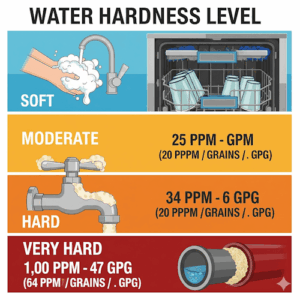
Hardness levels typically fall like this:
| Hardness Level | Grains Per Gallon (GPG) | Description |
| 0–3 | Soft | No treatment needed |
| 4–7 | Moderately hard | May benefit from softening |
| 8–14 | Hard | Softener recommended |
| 15+ | Very hard | Strong softening needed |
Step 2: Estimate Household Water Use
The next factor is how much water your family uses each day. A good rule of thumb is about 75 gallons per person per day. Of course, this varies if you have heavy water use, like frequent laundry, long showers, or outdoor irrigation.
Example:
- A family of four = 4 people x 75 gallons = 300 gallons per day.
Step 3: Multiply Hardness by Daily Use
Now multiply your daily water use by the hardness level to find out how many grains of hardness need to be removed each day.
Example:
- Hardness = 10 GPG
- Daily water use = 300 gallons
- 10 x 300 = 3,000 grains per day
Step 4: Factor in Iron (if applicable)
If you have iron in your water, add it to the hardness number. Each 1 part per million (ppm) of iron is roughly equal to 3–5 grains of hardness.
Example:
- Hardness = 10 GPG
- Iron = 2 ppm (x 4) = 8 additional grains
- Adjusted hardness = 18 GPG
Step 5: Find Weekly Total
Most water softeners are designed to regenerate about once per week. Multiply your daily grains by 7 to find your weekly demand.
Example:
- Daily = 3,000 grains
- Weekly = 3,000 x 7 = 21,000 grains
This means you’d need a water softener with a capacity of at least 21,000 grains.
Step 6: Match to a Standard Size
Water softeners are commonly sold in these sizes:
| Softener Size | Grain Capacity | Suitable Household Size |
| 24,000 grains | Small homes (1–2 people) | |
| 32,000 grains | Average homes (2–3 people) | |
| 48,000 grains | Medium homes (3–5 people) | |
| 64,000 grains | Larger homes (5–7 people) | |
| 80,000+ grains | Very large homes or commercial use |
In the example above (21,000 weekly grains), a 24,000-grain unit would be appropriate.
Common Mistakes to Avoid When Choosing a Size
Even with the math in hand, many homeowners make mistakes that can affect performance and costs. Let’s go through the most common pitfalls so you can avoid them.
Choosing Based on Number of Bathrooms Only
Some people assume the number of bathrooms determines the softener size. While it does give a rough idea of water use, it’s not accurate enough. Two households with three bathrooms could have very different water demands depending on family size and habits.
Going Too Small
If you pick a softener that’s too small, here’s what can happen:
- It regenerates too often, wasting water and salt.
- The system wears out faster.
- You may notice hard water slipping through between cycles.
Going Too Large
A larger unit isn’t always better. Oversized softeners can:
- Cost more up front.
- Waste salt during regeneration.
- Sit idle too long between cycles, which can affect resin performance.
Ignoring Iron and Other Minerals
If your water has iron, manganese, or other minerals, you can’t just size based on hardness alone. Failing to adjust for these factors means your softener won’t perform as expected.
Forgetting Efficiency
Modern softeners vary in how efficiently they use salt and water during regeneration. Two units of the same size may perform very differently in terms of operating costs.
Tips for Making the Best Choice
Once you’ve done the math and know your capacity needs, a few extra tips can help you make the best decision.
Look at Regeneration Frequency
The sweet spot is usually regenerating every 7 days. If your calculations show the unit would regenerate more often, consider a larger size. If it would regenerate less often than once every two weeks, you might be going too large.
Consider Your Water Source
- City water: Often has consistent hardness and little iron, making sizing straightforward.
- Well water: Can vary in hardness, iron, and other minerals, so sizing may require more adjustments.
Think About Future Needs
If your family is growing, or if you plan to add appliances that use more water, it might make sense to size up slightly to accommodate future demand.
Compare Salt Efficiency
Check the manufacturer’s specifications for salt efficiency. A unit that uses less salt per regeneration can save money over time, even if the upfront cost is higher.
Professional Advice
Even if you do your own calculations, it never hurts to get a second opinion from a professional installer. They can test your water and recommend the right unit based on experience.
FAQs About Water Softener Sizing
How do I know if my current softener is too small?
If your system regenerates every couple of days, or if you still notice hard water issues (like spots on dishes or stiff laundry), your unit may be undersized.
Can I oversize my water softener on purpose?
Yes, but only slightly. Oversizing too much leads to inefficiency. A small buffer is fine, but doubling your actual need is not recommended.
How long should a water softener last?
Most quality units last 10–15 years with proper maintenance. Choosing the right size helps extend its lifespan.
Do I always need a professional water test?
Not always. A home test kit is often accurate enough, but if you have well water with multiple contaminants, professional testing is worth it.
What’s the difference between single-tank and dual-tank systems?
Dual-tank systems provide soft water continuously, even during regeneration, and may be a better fit for very large households. However, sizing calculations remain the same.
Conclusion
Choosing the right size water softener is all about matching your household’s water hardness and usage with the system’s capacity. By testing your water, calculating your daily and weekly needs, and comparing those numbers with standard softener sizes, you can make a smart, efficient choice. Avoiding common mistakes—like choosing based only on bathrooms or ignoring iron content—ensures your softener runs smoothly for years.
The best size isn’t always the biggest or most expensive. It’s the one that fits your home, your habits, and your water. With the right system in place, you’ll enjoy the benefits of soft water—better tasting drinks, longer-lasting appliances, softer laundry, and smoother skin—without unnecessary costs or hassles.
Recommended Reading
Finding the Best Water Softener for Well Water in 2025: The Ultimate Guide
Unlock the Secret to Pure, Soft Well Water Discover the best water softener for your well, ensuring pristine water quality. Learn how to effectively combat hard water issues and their consequences. Save money and time by choosing the right softener for your needs. Improve the lifespan of your appliances and plumbing system. Enjoy the benefits […]
The Truth About Salt-Free Water Softeners: Pros and Cons
Unlock the Truth About Salt-Free Water Softeners Discover the pros and cons of salt-free water softener systems. Learn how salt-free softeners work and their effectiveness. Understand if a salt-free system is the right choice for your home. Explore the environmental impact and cost-effectiveness of salt-free options. Compare salt-free softeners to traditional salt-based systems. When it […]
Recommended Reading
Finding the Best Water Softener for Well Water in 2025: The Ultimate Guide
Unlock the Secret to Pure, Soft Well Water Discover the best water softener for your well, ensuring pristine water quality. Learn how to effectively combat hard water issues and their consequences. Save money and time by choosing the right softener for your needs. Improve the lifespan of your appliances and plumbing system. Enjoy the benefits […]
The Truth About Salt-Free Water Softeners: Pros and Cons
Unlock the Truth About Salt-Free Water Softeners Discover the pros and cons of salt-free water softener systems. Learn how salt-free softeners work and their effectiveness. Understand if a salt-free system is the right choice for your home. Explore the environmental impact and cost-effectiveness of salt-free options. Compare salt-free softeners to traditional salt-based systems. When it […]
How to Tell If Your Home Needs a Water Softener
Is Your Home Water Hard? Learn the Signs and Benefits of Softening!
- Identify the key indicators of hard water in your home.
- Understand the long-term advantages of using a water softener.
- Discover how soft water can improve your appliances’ lifespan.
- Learn how to maintain soft water for optimal home comfort.
- Explore various types of water softeners and find the perfect fit for your needs.
Water is something we often take for granted. We turn on the tap, fill a glass, cook with it, clean with it, and rarely stop to think about what’s in it. Yet, the quality of your home’s water can make a big difference in your daily life. If you’ve ever noticed your dishes looking cloudy even after washing, or your skin feeling unusually dry, it might not just be bad soap or the weather—it could be your water. Specifically, you might have hard water, and that’s where a water softener comes into play.
In this guide, we’ll walk through how to recognize the signs of hard water, understand the problems it creates, learn about the benefits of using a water softener, and figure out whether your home really needs one.
Understanding Hard Water and Why It’s a Problem
Before you can know whether your home needs a water softener, it helps to understand what “hard water” actually means. Hard water isn’t dirty or unsafe to drink. Instead, it simply contains high levels of dissolved minerals—mainly calcium and magnesium. These minerals get picked up as water moves through soil and rocks before reaching your tap.
While these minerals aren’t harmful to your health, they can cause several problems around your home. Over time, the buildup of these minerals creates noticeable issues with cleaning, plumbing, appliances, and even your personal comfort.
Key Characteristics of Hard Water
- Contains high amounts of calcium and magnesium.
- Can cause white, chalky buildup on faucets and showerheads.
- Reduces the effectiveness of soaps and detergents.
- Leaves behind stains and cloudy spots on glassware and dishes.
- Causes scaling in pipes and water-based appliances.
To make this clearer, let’s compare hard water and soft water:
| Feature | Hard Water | Soft Water |
| Mineral Content | High in calcium and magnesium | Low mineral content, often treated |
| Soap Interaction | Produces scum, reduces lather | Lathers easily, no residue |
| Effect on Appliances | Causes scale buildup, reduces efficiency | Keeps appliances running longer |
| Impact on Skin/Hair | Can leave skin dry, hair dull | Softer feel, smoother skin and hair |
| Household Surfaces | Leaves spots and stains | Streak-free cleaning |
Why This Matters
You might be thinking, “So what? If it’s not harmful, why worry?” The truth is, hard water affects more than just cleanliness. It can shorten the lifespan of your appliances, clog pipes over time, and increase energy costs. Even though you can still drink and cook with hard water, the long-term household effects can make it a costly problem.
Common Signs That You May Need a Water Softener
The good news is, you don’t need to be a plumber or a scientist to spot the signs of hard water in your home. Most of the time, your daily routine will show clues.
Everyday Clues to Watch Out For
- Spots on Dishes and Glassware
- You wash your dishes, dry them, and yet they still look cloudy or streaked. This is mineral residue, not poor washing.
- Soap Scum in the Bathroom
- Hard water reacts with soap, leaving behind a stubborn, filmy layer on tubs, sinks, and shower walls.
- Dry Skin and Dull Hair
- The minerals in hard water strip natural oils from your skin and hair, leaving them feeling dry and less healthy.
- Faded or Rough Laundry
- Clothes washed in hard water often look faded, stiff, and may even feel scratchy to the touch.
- Low Water Pressure
- Scale buildup inside pipes can gradually reduce water flow, leading to weak showers and slower-filling sinks.
- Appliance Issues
- Coffee makers, water heaters, dishwashers, and washing machines may start working less efficiently due to scale buildup inside.
- Increased Utility Bills
- As appliances work harder against mineral deposits, they consume more energy, which shows up in your monthly bills.
Quick Self-Test for Hard Water
You don’t always need lab equipment to check if your water is hard. Try this:
- Fill a clear bottle halfway with tap water.
- Add a few drops of liquid dish soap (without additives).
- Shake the bottle well.
If the water looks cloudy and forms little or no lather, you likely have hard water. If it stays clear and produces bubbles easily, your water is probably soft.
Telltale Household Clues Table
| Household Area | Hard Water Sign | What It Means for You |
| Kitchen Dishes | Cloudy spots, streaks | Minerals left behind after washing |
| Bathroom Fixtures | White, chalky buildup | Soap and minerals combining |
| Skin and Hair | Dryness, dull texture | Natural oils stripped away |
| Laundry | Rough, faded clothing | Fabric damage from mineral deposits |
| Pipes and Pressure | Reduced flow, scale buildup | Higher risk of clogs and damage |
| Appliances | Decreased efficiency | Shorter lifespan, more repairs |
If you see several of these signs around your home, it’s a strong indication that your household could benefit from a water softener.
The Benefits of Installing a Water Softener
Now that you know the signs, let’s talk about why investing in a water softener can be worthwhile. Many homeowners hesitate because they assume it’s just an extra expense. But in reality, a good water softener can save you money in the long run by protecting your home and making everyday tasks easier.
Practical Benefits
- Longer Appliance Lifespan
- Appliances that use water—like dishwashers, coffee makers, and washing machines—will last longer when they aren’t clogged with mineral buildup.
- Better Cleaning Results
- No more cloudy dishes or streaked glassware. Laundry comes out brighter, softer, and cleaner.
- Softer Skin and Hair
- Without minerals stripping away natural oils, your skin and hair feel smoother and healthier.
- Energy Savings
- Water heaters and appliances run more efficiently without scale buildup, lowering your energy bills.
- Reduced Plumbing Problems
- Soft water prevents scaling inside pipes, reducing the chances of clogs and costly plumbing repairs.
- Improved Comfort at Home
- From better showers to cleaner bathrooms, soft water improves your overall daily experience.
Cost Savings Example
Here’s a look at how a water softener could help reduce costs:
| Expense Area | With Hard Water | With Soft Water |
| Appliance Repairs | More frequent, costly | Less frequent, fewer replacements |
| Energy Bills | Higher (appliances work harder) | Lower (improved efficiency) |
| Cleaning Supplies | More soap and detergent needed | Less soap required |
| Laundry Costs | Clothes wear out faster, need replacing | Clothes last longer, stay brighter |
| Plumbing Maintenance | Scale removal and pipe issues | Reduced need for repairs |
Over time, these savings often outweigh the upfront cost of purchasing and installing a water softener.
Deciding If a Water Softener Is Right for Your Home
Knowing the signs and benefits is one thing, but how do you decide if you actually need to make the investment? Here are some steps you can take to make a confident decision.
Step 1: Assess the Signs in Your Home
Go through the list of common signs and check how many apply to your situation. A few spots on glassware might not be a big deal, but combined with low water pressure and dry skin, it points strongly toward hard water.
Step 2: Test Your Water
You can use a simple at-home test kit or contact a local service to measure the hardness level in your water. Results are usually given in “grains per gallon” (gpg):
- 0–3 gpg: Soft water
- 4–7 gpg: Moderately hard
- 8–10 gpg: Hard
- 11+ gpg: Very hard
If your reading is above 7 gpg, a water softener can make a noticeable difference.
Step 3: Consider Your Household Needs
Ask yourself:
- Do you own appliances that rely heavily on water?
- Are you tired of frequent cleaning to remove soap scum or mineral spots?
- Have you noticed skin or hair changes after bathing?
- Do you want to save on long-term energy and maintenance costs?
If you answered “yes” to several of these, the investment is likely worth it.
Step 4: Weigh the Costs vs. Benefits
A water softener system does require upfront installation costs and occasional maintenance. However, when you factor in the extended lifespan of appliances, lower utility bills, and improved quality of life, it often pays for itself over time.
Quick Decision Guide
| Question | If Yes, You Likely Need a Softener |
| Do you see cloudy spots on glassware? | Yes |
| Is soap scum a constant cleaning battle? | Yes |
| Do you feel dry after showers? | Yes |
| Are your appliances less efficient? | Yes |
| Has your water test shown hardness > 7 gpg? | Yes |
If most of your answers are “yes,” your home would benefit from a water softener.
Final Thoughts
Hard water isn’t dangerous to your health, but it can be a real nuisance for your home and your wallet. From cloudy dishes and dry skin to worn-out appliances and higher bills, the effects of hard water add up over time.
Installing a water softener can solve these problems, giving you cleaner dishes, softer clothes, better showers, and fewer headaches with plumbing and appliances. The key is recognizing the signs early and deciding whether the investment is right for your household.
So the next time you’re scrubbing soap scum off your shower wall or wondering why your water heater seems sluggish, take a closer look—it might just be your water telling you it’s time for a softener.
Recommended Reading
Finding the Best Water Softener for Well Water in 2025: The Ultimate Guide
Unlock the Secret to Pure, Soft Well Water Discover the best water softener for your well, ensuring pristine water quality. Learn how to effectively combat hard water issues and their consequences. Save money and time by choosing the right softener for your needs. Improve the lifespan of your appliances and plumbing system. Enjoy the benefits […]
Top 10 Benefits of Using a Water Softener in Your Home
Unlock the 10 Amazing Benefits of a Water Softener Say goodbye to hard water stains and enjoy sparkling clean surfaces. Protect your plumbing system and appliances from damage caused by hard water. Experience softer, healthier-looking skin and hair. Enjoy cleaner, brighter laundry without the need for harsh chemicals. Reduce the amount of soap and detergent […]
How to Test Your Water Hardness at Home
Unlock the Secrets of Your Water: Learn to Test Hardness at Home Easily understand water hardness and its impact on your home. Master simple, at-home water hardness testing methods. Learn to interpret your results and take informed actions. Discover how to improve your water quality and protect appliances. Save money and time by avoiding costly […]
Best Water Softener Brands of 2025: Ranked and Reviewed
Unlock Softer Water and a Better Home with Our Expert Guide Discover the top-rated water softener brands for 2025. Learn how to choose the perfect softener for your home’s needs. Understand the benefits of soft water and its impact on your appliances. Save money and time by avoiding costly repairs related to hard water damage. […]
How to Save Money on Water Softener Salt Without Sacrificing Quality
Is Your Home Water Hard? Learn the Signs and Benefits of Softening!
- Identify the key indicators of hard water in your home.
- Understand the long-term advantages of using a water softener.
- Discover how soft water can improve your appliances’ lifespan.
- Learn how to maintain soft water for optimal home comfort.
- Explore various types of water softeners and find the perfect fit for your needs.
When you rely on a water softener at home, one expense that keeps showing up is the cost of salt. While it’s an essential element for keeping your water softener system working properly, the price of constantly replenishing salt bags can add up quickly. The good news? You don’t have to give up quality water just to save money. With the right strategies, you can reduce your salt costs, extend the life of your water softener, and still enjoy the benefits of soft water in your home.
In this article, we’ll break everything down into four key sections: understanding the role of salt, practical ways to cut costs, comparisons of salt types and savings, and long-term habits that keep your wallet and water softener in balance.
Why Water Softener Salt Matters and How It Works
Before diving into savings strategies, it’s important to understand why water softener salt is necessary. Water softeners work through a process called ion exchange. Hard water contains high levels of calcium and magnesium. These minerals may not be harmful, but they cause scale buildup in pipes, soap scum on fixtures, and can make laundry feel stiff.
Here’s where salt steps in. Salt, when dissolved in water inside the brine tank, regenerates the resin beads inside the softener. These beads trap hardness minerals, but once they become saturated, salt is needed to flush out the calcium and magnesium and recharge the beads. Without salt, your softener is basically useless.
So while cutting costs is important, maintaining quality salt use ensures your system continues to:
- Prevent scale buildup in plumbing
- Improve efficiency of soaps and detergents
- Keep appliances like dishwashers and washing machines lasting longer
- Deliver softer skin and hair after showers
A common mistake people make is trying to skip salt refills or switching to the cheapest option without considering performance. That usually backfires because low-grade salt can cause bridging (hard crusts in the tank) or leave behind insoluble residues. The result? More maintenance, more breakdowns, and higher long-term costs.
Smart Strategies to Save Money on Water Softener Salt
Saving money doesn’t mean compromising the system’s performance. The key is being strategic about how you buy, store, and use salt. Below are practical approaches you can apply immediately.
Buy in Bulk
Salt is often cheaper when purchased in larger quantities. Many retailers offer discounts when you buy multiple bags at once. Just make sure you have a dry place to store them, since moisture can cause clumping.
Choose the Right Salt for Your System
Not every water softener needs premium pellets. For example:
- Pellet salt is cleaner and dissolves efficiently, making it great for households with high water use.
- Crystal or solar salt is often less expensive and works well in smaller households.
- Block salt can sometimes be cheaper, but only certain systems are designed for it.
Matching the right type of salt to your household needs prevents unnecessary spending.
Regularly Clean and Maintain the Brine Tank
A dirty or clogged brine tank will waste salt. By cleaning it once or twice a year, you reduce the chances of bridging and sludge buildup. This means every grain of salt you buy goes directly toward softening your water instead of being wasted.
Monitor and Adjust Softener Settings
Most modern water softeners let you adjust regeneration cycles. If your softener regenerates too frequently, you’ll use more salt than needed. Tailoring settings to your actual water usage can save both salt and water.
Look for Local Deals or Delivery Programs
Some suppliers offer subscription delivery services with discounts. Local hardware stores may run seasonal promotions, especially in spring or fall when demand fluctuates.
Here’s a simple list to keep in mind when cutting costs:
- Buy larger quantities when possible
- Store bags in a dry place
- Match salt type to your household usage
- Clean the brine tank at least once a year
- Check settings to avoid unnecessary regeneration
- Explore delivery and discount programs
These small shifts can add up to significant yearly savings.
Comparing Salt Types and Cost Savings
To really see how savings work, it helps to compare the different types of softener salt available. Not all options are equal, and the “cheapest” bag might not actually be the most cost-effective in the long run.
Here’s a table showing common salt types, average prices, and what you can expect in terms of performance and cost efficiency:
| Salt Type | Average Cost (per 40 lb bag) | Pros | Cons | Best For |
| Rock Salt | $5 – $7 | Inexpensive, widely available | Leaves residue, less efficient | Short-term savings, budget users |
| Solar Salt Crystals | $6 – $8 | Natural, dissolves well in most systems | May struggle with very hard water | Medium water hardness households |
| Pellet Salt | $8 – $10 | Clean, dissolves completely, reduces buildup | Slightly more expensive | High water usage households |
| Potassium Chloride | $25 – $30 | Eco-friendly, good for low-sodium diets | High price, not always stocked | Health-conscious users |
| Block Salt | $6 – $9 | Long-lasting, works in compatible systems | Not suitable for all softeners | Systems designed for blocks |
From this comparison, you can see that while rock salt looks cheapest upfront, the residue it leaves behind may mean more maintenance or even damage to the softener. Pellet salt, though pricier, may actually save you money in the long term by keeping your system cleaner and running efficiently.
The takeaway: focus on value, not just price. The “best” salt is the one that balances cost with system compatibility and long-term efficiency.
Long-Term Habits That Keep Costs Low Without Sacrificing Quality
Beyond salt selection and short-term savings, it’s your long-term habits that make the biggest difference. Treating your water softener like an investment will not only extend its life but also ensure you don’t overspend year after year.
Regular Maintenance Saves Money
A neglected system consumes more salt and water. By sticking to a maintenance routine—such as checking for salt bridges, cleaning the tank, and inspecting settings—you prevent waste.
Invest in a High-Efficiency Softener
If your system is older, it may use more salt than necessary. Modern softeners are designed to regenerate only as needed, dramatically cutting salt usage. While buying a new system may seem costly, the savings on salt and water bills can make up for it over time.
Use Soft Water Wisely
Remember, soft water reduces soap and detergent usage. That means you save money not just on salt, but also on cleaning products, laundry detergent, and even energy bills (since appliances run more efficiently without scale buildup).
Track Your Salt Usage
Many people simply refill bags without noticing how much salt is being used monthly. Tracking usage helps you notice unusual spikes, which might signal a problem like a leaking valve or an overactive regeneration cycle.
Store Salt Properly
Improper storage leads to wasted money. Bags exposed to moisture will clump and become unusable. Keep salt in a dry, elevated area and consider using sealed containers if your storage area is prone to dampness.
Here’s a simple breakdown of good long-term habits:
- Maintain and clean your system regularly
- Upgrade to an efficient water softener if possible
- Use soft water benefits to save on soaps and detergents
- Keep track of monthly salt consumption
- Store salt properly to avoid waste
By combining these habits with smart purchasing decisions, you can enjoy reliable soft water without constantly draining your budget.
Wrapping It All Up
Saving money on water softener salt doesn’t have to mean cutting corners or sacrificing water quality. By understanding how salt works in your system, choosing the right type for your household, shopping smarter, and adopting long-term maintenance habits, you’ll see noticeable savings year after year.
Think of it as a balance: you’re not just buying salt, you’re investing in your home’s plumbing, appliances, and even your daily comfort. Soft water makes cleaning easier, clothes feel better, and your system run smoothly—all of which translate to hidden savings beyond just the cost of salt bags.
If you start applying even a few of these strategies today, you’ll not only reduce your spending but also protect your water softener from unnecessary strain. That’s money saved now and in the future.
Recommended Reading
Finding the Best Water Softener for Well Water in 2025: The Ultimate Guide
Unlock the Secret to Pure, Soft Well Water Discover the best water softener for your well, ensuring pristine water quality. Learn how to effectively combat hard water issues and their consequences. Save money and time by choosing the right softener for your needs. Improve the lifespan of your appliances and plumbing system. Enjoy the benefits […]
SpringWell FutureSoft Salt-Free Water Softener Review: Does It Really Work?
Unlock Softer, Healthier Water Without the Salt! Discover if the SpringWell FutureSoft Salt-Free Water Softener lives up to its claims. Learn about the technology behind salt-free water softening and how it works. Understand the pros and cons of salt-free water softeners compared to traditional systems. Find out if a salt-free water softener is the right […]
Top 10 Benefits of Using a Water Softener in Your Home
Unlock the 10 Amazing Benefits of a Water Softener Say goodbye to hard water stains and enjoy sparkling clean surfaces. Protect your plumbing system and appliances from damage caused by hard water. Experience softer, healthier-looking skin and hair. Enjoy cleaner, brighter laundry without the need for harsh chemicals. Reduce the amount of soap and detergent […]
The Ultimate Guide to Choosing the Right Size Water Softener
Unlock the Secret to Perfect Soft Water Determine the ideal water softener size for your home. Learn how to calculate your home’s water usage for accurate sizing. Understand different softener types and their benefits. Avoid common mistakes when choosing a water softener. Master the art of selecting a water softener that perfectly fits your needs […]
How to Remove Limescale Without Harsh Chemicals
Banish Limescale Naturally!
- Discover effective, chemical-free methods for limescale removal.
- Learn simple techniques to restore sparkling surfaces in your kitchen and bathroom.
- Save money by avoiding expensive chemical cleaners.
- Protect your family’s health with eco-friendly cleaning solutions.
- Enjoy a cleaner, healthier home without harsh chemicals.
Hard water is something many households deal with, and with it comes the stubborn, chalky buildup we call limescale. If you’ve ever noticed white or greenish crust forming around your faucets, showerheads, kettles, or even your bathroom tiles, that’s limescale. Not only does it make surfaces look dirty, but it can also damage appliances, reduce water flow, and shorten the lifespan of plumbing fixtures.
The good news is you don’t need to rely on harsh, toxic chemicals to deal with it. There are simple, safe, and natural ways to remove limescale that are effective and budget-friendly. Let’s explore how you can tackle limescale without compromising your health or the environment.
Understanding Limescale and Why It’s a Problem
Limescale is mainly composed of calcium carbonate, which builds up when hard water evaporates and leaves mineral deposits behind. The harder the water in your area, the faster and thicker limescale forms. While it may seem like a cosmetic issue at first, it can cause real problems over time.
Where You’ll Find Limescale Most Often:
- Bathroom fixtures: Taps, showerheads, and tiles
- Kitchen appliances: Kettles, coffee machines, dishwashers
- Pipes and plumbing: Can reduce water flow
- Glass and mirrors: Cloudy marks that don’t wipe away easily
Why Limescale Matters:
- Reduces efficiency: Appliances like kettles and dishwashers take longer to work and use more energy.
- Shortens appliance lifespan: Heating elements wear out faster when covered with limescale.
- Affects water flow: Pipes and showerheads clog, leading to weak water pressure.
- Unpleasant look: White streaks on chrome taps or shower doors can make even a clean bathroom look dirty.
Here’s a quick table to understand the difference between using harsh chemicals and natural solutions for limescale:
| Aspect | Harsh Chemicals | Natural Solutions |
| Safety | Can irritate skin, eyes, and lungs | Safe and gentle |
| Environmental impact | Polluting, harmful runoff | Eco-friendly |
| Cost | Can be expensive | Budget-friendly |
| Effectiveness | Fast, but not always long-lasting | Effective with consistent use |
| Availability | Requires store-bought products | Often already in your kitchen |
By learning to use natural methods, you not only protect your home but also create a safer environment for your family.
Natural Ingredients That Work Against Limescale
You don’t need fancy products to fight limescale. In fact, you probably already have the most effective remedies sitting in your pantry. Let’s break down the natural ingredients that work wonders against calcium buildup.
1. White Vinegar
Vinegar is acidic, making it excellent at dissolving calcium carbonate. It’s one of the most popular and effective natural descalers.
- Best for: Faucets, showerheads, kettles, coffee machines
- How to use: Soak a cloth in vinegar and wrap it around taps, or fill your kettle with vinegar and let it sit before boiling.
2. Lemon Juice
Like vinegar, lemon juice is acidic and can eat away at limescale. Plus, it leaves behind a fresh scent.
- Best for: Glass, chrome surfaces, tiles
- How to use: Rub half a lemon directly on the affected area or apply lemon juice with a sponge.
3. Baking Soda
Baking soda is a mild abrasive that helps scrub away limescale without scratching surfaces. It also deodorizes.
- Best for: Sinks, tubs, and areas that need gentle scrubbing
- How to use: Mix baking soda with water to form a paste and scrub with a soft cloth or brush.
4. Citric Acid
A natural acid derived from citrus fruits, citric acid works faster than vinegar in some cases.
- Best for: Kettles, dishwashers, washing machines
- How to use: Dissolve citric acid powder in hot water and let it run through the appliance.
5. Salt
While not as strong as vinegar or citric acid, salt can add extra scrubbing power.
- Best for: Pairing with lemon juice to tackle stubborn stains
- How to use: Sprinkle salt on half a lemon and scrub limescale on tiles or faucets.
Table: Quick Guide to Natural Ingredients
| Ingredient | Works Best On | Method |
| Vinegar | Taps, kettles, showerheads | Soak or boil with vinegar |
| Lemon juice | Glass, tiles, chrome | Rub or apply juice |
| Baking soda | Sinks, tubs | Scrub with paste |
| Citric acid | Appliances | Dissolve and run cycle |
| Salt | Tiles, faucets | Scrub with lemon |
These everyday items are not just affordable—they also save you from the risks associated with commercial limescale removers.
Step-by-Step Methods for Different Surfaces
Now that you know which ingredients work best, let’s go over how to use them for different areas of your home.
1. Faucets and Showerheads
Method:
- Soak a cloth in white vinegar.
- Wrap it tightly around the faucet or showerhead.
- Leave it for at least an hour (overnight for heavy buildup).
- Remove the cloth and scrub gently with a toothbrush.
- Rinse with water and dry with a clean cloth.
Tip: For detachable showerheads, place them in a bag filled with vinegar and let soak.
2. Kettles and Coffee Machines
Method for Kettles:
- Fill the kettle halfway with equal parts vinegar and water.
- Let it sit for 1–2 hours.
- Boil the solution, then discard.
- Rinse thoroughly with fresh water and boil again to remove any vinegar taste.
Method for Coffee Machines:
- Mix citric acid or vinegar with water.
- Run the solution through the machine.
- Follow with at least two cycles of fresh water to rinse.
3. Bathroom Tiles and Glass
Method:
- Apply lemon juice or vinegar directly to limescale stains.
- Let it sit for 15–30 minutes.
- Sprinkle baking soda on a damp sponge and scrub.
- Rinse with warm water and dry with a microfiber cloth.
Tip: For shower doors, use a spray bottle with vinegar for easy application.
4. Toilets
Method:
- Pour vinegar or citric acid solution into the bowl.
- Let it sit for an hour or overnight.
- Scrub with a toilet brush.
- Flush to rinse.
5. Dishwashers and Washing Machines
Method:
- Add 2–3 tablespoons of citric acid to the detergent compartment.
- Run a hot, empty cycle.
- Wipe down rubber seals with vinegar afterward.
Tip: Do this monthly to keep your machines running smoothly.
List: Quick Checklist for Limescale Removal
- Always test on a small hidden area before applying natural cleaners.
- Never mix vinegar and baking soda in a sealed container—they fizz and can cause pressure buildup.
- For stubborn limescale, repeat the process rather than scrubbing too hard.
- Regular maintenance prevents buildup and makes cleaning easier.
Preventing Limescale Naturally
Removing limescale is one thing, but preventing it is just as important. With a few smart habits, you can reduce buildup and keep your home looking clean longer.
Simple Prevention Tips:
- Wipe surfaces dry: After using taps, showers, or sinks, wipe them down to prevent water spots and mineral deposits.
- Use a squeegee: Keep one in your bathroom to quickly clear water from glass doors and tiles.
- Install a water softener: Though an investment, it significantly reduces limescale by removing excess minerals.
- Descale appliances regularly: Don’t wait until buildup is heavy—clean your kettle or coffee machine monthly.
- Switch to filtered water: For drinking appliances like kettles and coffee makers, filtered water helps reduce mineral deposits.
Table: Prevention Methods vs. Benefits
| Prevention Method | Benefit |
| Wiping surfaces dry | Prevents water spots and buildup |
| Using a squeegee | Keeps glass and tiles clear |
| Water softener | Reduces limescale in entire home |
| Regular descaling | Protects appliances and efficiency |
| Filtered water | Reduces mineral deposits in kettles |
By being proactive, you’ll spend less time scrubbing and more time enjoying a clean, functional home.
Final Thoughts
Limescale may seem like a never-ending battle, especially if you live in a hard water area, but you don’t need harsh chemicals to keep it under control. Natural solutions like vinegar, lemon juice, baking soda, and citric acid are not only effective but also safer for your health and the environment.
The trick is consistency—regular cleaning and a few prevention habits will make limescale much easier to manage. Think of it this way: instead of reaching for strong, chemical-laden cleaners, you can grab simple kitchen ingredients and get the job done just as well.
A clean home doesn’t have to come at the expense of your health or the planet. With these natural methods, you’ll keep limescale at bay while making your everyday cleaning routine safer, greener, and more budget-friendly.
How to Test Your Water Hardness at Home
Unlock the Secrets of Your Water: Learn to Test Hardness at Home
- Easily understand water hardness and its impact on your home.
- Master simple, at-home water hardness testing methods.
- Learn to interpret your results and take informed actions.
- Discover how to improve your water quality and protect appliances.
- Save money and time by avoiding costly water treatment mistakes.
When you think about the water coming out of your faucet, you probably assume it’s clean, safe, and good enough for daily use. But not all water is the same, and one of the most overlooked differences is water hardness. Some households deal with water that leaves white streaks on glasses, dries out the skin, and even reduces the life of appliances. That’s the effect of hard water. On the other hand, some homes have soft water that doesn’t cause those issues.
The question is, how can you really know if your water is hard or soft? The good news is that you don’t need to spend a fortune or call in professionals just to get a basic idea. With a little guidance and the right steps, you can test your water hardness at home.
In this article, we’ll dive deep into what water hardness is, why it matters, different methods you can use to test it, and what you can do once you know the results.
Understanding Water Hardness
Before learning how to test your water, it helps to understand what water hardness really means. At its simplest, water hardness refers to the amount of dissolved minerals in the water, particularly calcium and magnesium. These minerals get into the water naturally when it flows through soil and rocks.
- Hard water has a high concentration of calcium and magnesium.
- Soft water has low levels of these minerals.
Here’s the catch: water hardness isn’t harmful to your health in most cases. In fact, calcium and magnesium are essential minerals. But the problem shows up in other ways around your home.
Common Signs of Hard Water
- White, chalky spots on glasses and dishes after washing.
- Soap not lathering properly when showering or doing laundry.
- Dry or itchy skin after bathing.
- Scale buildup inside kettles, coffee makers, or water heaters.
- Reduced efficiency or shorter lifespan of appliances like dishwashers or washing machines.
Why Water Hardness Matters
You might wonder why it’s important to test water hardness if it doesn’t directly harm your health. The reason is that water quality affects your comfort, your wallet, and the lifespan of household systems. For example:
- Hard water requires more soap or detergent to clean effectively, which means higher household costs.
- Scale buildup inside pipes and water heaters can lead to expensive repairs.
- Fabrics washed in hard water may become stiff or fade faster.
- Skin and hair can feel dull and dry after repeated exposure to hard water.
So, understanding your water hardness is the first step toward solving these issues.
Water Hardness Scale
Water hardness is usually measured in either parts per million (ppm) or grains per gallon (gpg). Here’s a simple table that breaks down the general categories:
| Hardness Level | ppm (mg/L) of Calcium Carbonate | gpg (grains per gallon) | Category |
| 0 – 60 ppm | 0 – 3.5 gpg | Soft | |
| 61 – 120 ppm | 3.6 – 7 gpg | Moderately Hard | |
| 121 – 180 ppm | 7.1 – 10.5 gpg | Hard | |
| 181+ ppm | 10.6+ gpg | Very Hard |
This scale gives you a clearer picture of what your water might be like once you test it.
Simple At-Home Testing Methods
Now that you know why water hardness matters, let’s talk about how you can actually test it at home. Some methods are quick and practically free, while others involve inexpensive testing kits that give more reliable results.
The Soap Bottle Test
This is one of the oldest and easiest ways to get an idea about water hardness. All you need is a clear bottle with a cap and some pure liquid soap (not detergent).
Steps:
- Fill the bottle about one-third full with tap water.
- Add a few drops of liquid soap.
- Shake the bottle vigorously.
- Check for bubbles and clarity.
What you’ll notice:
- If the water produces a lot of bubbles and the water beneath remains clear, your water is likely soft.
- If very few bubbles form and the water looks cloudy, it indicates hard water.
This test won’t give you exact numbers, but it gives a quick first impression.
Test Strips
Water hardness test strips are widely available and very easy to use.
Steps:
- Dip the strip into a cup of tap water.
- Wait for the colors to change.
- Compare the strip against the provided chart.
Test strips measure hardness in ppm and are affordable. They’re good for quick results and can give you a better sense of where your water falls on the hardness scale.
Titration Kits
If you want something more accurate, titration kits are a good choice. These involve adding a reagent to a measured amount of your water until the color changes, indicating the hardness level.
Steps:
- Collect a water sample in the container provided.
- Add the reagent drop by drop, counting carefully.
- Stop when the color changes.
- Use the instructions to calculate hardness based on the number of drops used.
These kits usually measure in gpg or ppm and are more reliable than test strips.
DIY Household Clues
If you don’t want to spend money at all, you can rely on the everyday signs in your home. While this isn’t a true test, it gives you a clue:
- Scale inside your kettle or coffee pot means calcium buildup.
- Cloudy spots on glasses after dishwashing indicate hard water.
- Soap scum on sinks and tubs is a clear sign too.
Although less scientific, these clues are helpful to confirm what you might suspect.
Interpreting Results and What They Mean
Once you’ve done a test, you’ll want to know what to make of the results. Testing tells you how much calcium and magnesium are present, but what does that mean for your daily life?
Soft Water Results
- Soap lathers easily.
- No or very little buildup in appliances.
- Usually more comfortable for bathing and laundry.
- Sometimes tastes slightly salty if treated with a water softener.
Moderately Hard Water Results
- May show mild spotting on dishes.
- Soap works but needs a little more effort.
- Appliances may develop scale over time.
- Usually manageable without major changes, though some households still prefer softening.
Hard Water Results
- Frequent white spots on glasses, dishes, and faucets.
- Clothes may feel rough after washing.
- More detergent and soap needed to clean effectively.
- Appliances like water heaters and dishwashers may need maintenance sooner.
Very Hard Water Results
- Heavy scale buildup in pipes and appliances.
- Noticeable impact on water heater efficiency.
- Soap almost never lathers well.
- Significant costs over time due to repairs, cleaning, and replacements.
Here’s a table summarizing the lifestyle impact based on water hardness levels:
| Hardness Category | Typical Signs | Household Impact |
| Soft | Clear water, good soap lather | Comfortable for bathing, gentle on fabrics, less wear on appliances |
| Moderately Hard | Some spots, minor scale | Manageable but noticeable over time |
| Hard | Frequent spots, soap scum | Increased cleaning, higher detergent use, appliance wear |
| Very Hard | Heavy scale, poor lather | Costly maintenance, appliance damage, discomfort |
What to Do After Testing
Now that you know your water hardness level, the next step is deciding what to do with that information. Not every household needs to make a change, but if your test results show moderate to very hard water, it may be worth exploring solutions.
Solutions for Hard Water
- Water Softeners
Traditional water softeners use salt to remove calcium and magnesium ions from the water. This is one of the most effective solutions for households with very hard water. - Salt-Free Conditioners
Instead of removing minerals, these devices change the way minerals behave, preventing them from sticking to surfaces. They don’t soften water but reduce scale buildup. - Reverse Osmosis Systems
These filter out a wide range of minerals and impurities, producing very soft water. They’re often installed under the sink for drinking and cooking water. - Magnetic or Electronic Descalers
These devices claim to reduce scaling by using magnetic fields. While opinions on their effectiveness vary, some households find them helpful.
Lifestyle Adjustments
Not every solution involves installing new equipment. Sometimes, smaller changes can make hard water more manageable:
- Use detergents designed for hard water.
- Clean appliances like kettles regularly to remove scale.
- Wipe faucets and sinks to prevent buildup.
- Moisturize skin and hair to counteract dryness.
When to Call a Professional
If your test shows very high levels of hardness or you notice significant scaling in your plumbing, it may be worth calling in a water treatment professional. They can run more detailed tests and recommend the best long-term solutions for your specific household.
FAQs About Testing Water Hardness
Can I drink hard water?
Yes, hard water is generally safe to drink. It even provides minerals like calcium and magnesium. The main issues are with household appliances, cleaning, and comfort.
How often should I test my water hardness?
Testing once a year is usually enough, unless you notice new problems like scale buildup or poor soap performance.
Is bottled water soft or hard?
Most bottled water tends to be soft, but it varies by brand. The label sometimes lists mineral content.
Can hard water damage my health?
For most people, hard water doesn’t pose health risks. In fact, the minerals can be beneficial. However, extremely hard water can cause minor digestive issues for sensitive individuals.
Do water softeners remove other contaminants?
No. Standard water softeners only target calcium and magnesium. For contaminants like lead or chlorine, you’ll need additional filtration systems.
Conclusion
Testing your water hardness at home is a simple but powerful step toward understanding your water quality. Whether you use a soap test, test strips, or a titration kit, you’ll quickly get an idea of where your water falls on the hardness scale. Once you know the results, you can make informed choices—whether that means investing in a water softener, switching detergents, or simply taking steps to protect your appliances.
Hard water doesn’t have to be a mystery. By testing it yourself, you gain control over the comfort, efficiency, and costs of your household. In the long run, a little testing today can save you big headaches tomorrow.
Recommended Reading
Unlock the Secret to Pure, Soft Well Water Discover the best water softener for your well, ensuring pristine water quality. Learn how to effectively combat hard water issues and their consequences. Save money and time by choosing the right softener for your needs. Improve the lifespan of your appliances and plumbing system. Enjoy the benefits […]
Unlock the Secret to Perfect Soft Water Determine the ideal water softener size for your home. Learn how to calculate your home’s water usage for accurate sizing. Understand different softener types and their benefits. Avoid common mistakes when choosing a water softener. Master the art of selecting a water softener that perfectly fits your needs […]
Is Your Home Water Hard? Learn the Signs and Benefits of Softening! Identify the key indicators of hard water in your home. Understand the long-term advantages of using a water softener. Discover how soft water can improve your appliances’ lifespan. Learn how to maintain soft water for optimal home comfort. Explore various types of water […]
Regenerate Your Water Softener Like a Pro Master the art of water softener regeneration. Extend the lifespan of your water softener. Enjoy optimal water quality and efficiency. Save money on water and energy bills. Prevent costly repairs and replacements. When it comes to home water care, one thing that often gets overlooked is the regeneration […]
How to Maintain Your Water Softener for Peak Performance
Keep Your Water Softener Running Smoothly
- Learn the simple steps for maintaining your water softener.
- Extend the lifespan of your system and avoid costly repairs.
- Enjoy consistently soft water without performance issues.
- Save money on water bills by preventing premature system failure.
- Master troubleshooting techniques for common water softener problems.
When it comes to keeping your household appliances running smoothly, your water softener often doesn’t get the attention it deserves. Many homeowners install one, enjoy the benefits of soft water, and then forget it’s even there—until problems arise. But just like your car needs regular oil changes, your water softener needs consistent care to keep working efficiently. With the right maintenance habits, you’ll extend its lifespan, avoid costly repairs, and ensure your water always feels fresh, soft, and clean.
In this article, we’ll break down everything you need to know about maintaining your water softener in a straightforward and practical way. You’ll find tips, step-by-step instructions, and even a few troubleshooting insights to keep your system performing at its best.
Understanding Why Maintenance Matters
Before diving into the how-to, it’s worth understanding why water softener maintenance is so important. At its core, a water softener removes hardness minerals—mainly calcium and magnesium—from your water. This protects your plumbing, reduces soap scum, prevents scale buildup in appliances, and makes water gentler on your skin and clothes.
However, because your system is constantly cycling water through resin beads and relying on salt to regenerate, it can wear down if neglected. Common issues that crop up with poor maintenance include:
- Salt bridges: A hardened crust of salt forming in the tank, preventing proper regeneration.
- Clogged resin beads: Reduced capacity to soften water because the beads are coated with iron, sediment, or dirt.
- Low efficiency: Higher water and salt use than necessary.
- Appliance damage: Limescale buildup in dishwashers, washing machines, or water heaters due to untreated hard water.
To put it simply, regular maintenance ensures your investment works properly. A well-cared-for system can last 10–15 years or more, while neglected units often fail much sooner.
Quick Fact Table: Lifespan of Water Softener Components
| Component | Average Lifespan | Notes for Care |
| Resin beads | 10–15 years | Clean with resin cleaner yearly |
| Brine tank | 10+ years | Prevent salt bridges and clean once a year |
| Control valve | 10–15 years | Needs occasional inspection and lubrication |
| Entire system | 10–20 years | Lifespan depends on water quality and upkeep |
When you think about it, water softener care isn’t just about protecting the unit itself—it’s about protecting your whole home from hard water damage.
Routine Care for Everyday Efficiency
Now that you know why maintenance matters, let’s talk about what you should do regularly. Daily or weekly check-ins aren’t usually necessary, but monthly and seasonal habits can make all the difference.
1. Keep an Eye on Salt Levels
Your water softener runs on salt to regenerate the resin beads. Without enough salt, the system simply can’t do its job. As a rule of thumb, check the salt level in the brine tank once a month.
- If the salt looks low, refill it to about two-thirds full.
- Don’t overfill, as too much salt can cause bridging.
- Use high-quality salt pellets or crystals instead of rock salt, which often contains dirt and impurities.
2. Watch for Salt Bridges and Mushing
Sometimes salt forms a hard crust, called a salt bridge, or breaks down into a sludge-like paste, known as salt mushing. Both block the system from regenerating properly.
To fix a salt bridge:
- Take a broom handle or stick.
- Gently push down to break up the crust.
- Remove any large chunks of salt.
To fix salt mushing:
- Empty the tank, scoop out the mush, and refill with fresh salt.
3. Clean the Brine Tank Annually
Think of this as a spring-cleaning task. Once a year, empty the brine tank, rinse it out, and scrub off any build-up. This prevents sediment or mold growth that could affect water quality.
4. Resin Bead Care
Resin beads don’t usually need constant attention, but they do benefit from an occasional cleaning—especially if your water has high iron content. A resin cleaner poured into the system every 6–12 months helps keep the beads in top shape.
5. Check the Settings
Your water softener’s control valve determines how often regeneration occurs. If you’ve recently added people to your household or noticed water hardness creeping back in, you might need to adjust the settings to match your water usage.
Checklist: Monthly Water Softener Care
- Inspect salt level
- Break up any salt bridges
- Look for salt mush or sludge
- Wipe down outside of the tank
- Listen for unusual noises in the control valve
Routine care doesn’t take much time—usually just a few minutes each month—but it saves you from bigger headaches later.
Troubleshooting Common Issues
Even with the best care, you might run into a hiccup here and there. The good news is that most water softener problems are easy to spot and fix without calling a professional right away.
Issue 1: Hard Water Slipping Through
If you notice spots on dishes, stiff laundry, or soap that won’t lather, your system may not be softening water properly. Possible causes include:
- Low salt levels in the tank
- Resin beads clogged with iron or dirt
- A salt bridge blocking the brine
- Control valve malfunction
Fix: Start by checking salt levels and breaking up any bridges. If that doesn’t help, use a resin cleaner or reset the control valve.
Issue 2: Strange Noises
A humming or clicking sound usually comes from the motor or control valve. It’s often normal, but loud grinding noises may signal a problem.
Fix: Clean the valve or call for service if the sound persists.
Issue 3: Overflowing Brine Tank
If water rises too high in the brine tank, the float valve may be stuck, or the drain line could be clogged.
Fix: Inspect the float assembly, clear blockages, and make sure the drain hose isn’t kinked.
Issue 4: Excessive Salt Usage
If your system burns through salt faster than usual, it could be regenerating too often.
Fix: Recheck the control valve settings. You may need to adjust the regeneration frequency.
Troubleshooting Table: Quick Reference
| Problem | Likely Cause | DIY Solution |
| Hard water present | Low salt, resin clog, bridge | Add salt, clean resin, break bridge |
| Strange noises | Valve issue or motor | Clean valve, service if needed |
| Brine tank overflowing | Stuck float or clog | Free float, clear drain line |
| High salt usage | Frequent regeneration | Adjust control valve settings |
When problems seem bigger than a DIY fix—such as persistent hard water despite trying all solutions—it’s wise to call a professional technician.
Long-Term Care for Peak Performance
While monthly and annual tasks keep your system running day-to-day, long-term habits are what ensure your water softener stays reliable for years to come.
1. Use the Right Salt
Not all salt is created equal. Rock salt is cheap but dirty, often leaving sediment in your tank. Solar salt and evaporated salt pellets are purer and help your system stay clean longer.
2. Test Your Water Regularly
Even with a water softener, it’s a good idea to test your water once or twice a year. This lets you catch changes in hardness or iron levels that may require adjustments.
3. Replace Resin Beads When Needed
Although resin beads can last over a decade, they eventually wear out. Signs it’s time to replace them include reduced efficiency, constant hard water, or the need for frequent regeneration.
4. Keep the System Sanitized
Every couple of years, sanitize your softener. Many manufacturers recommend running a bleach solution through the system to kill bacteria that may develop in the brine tank.
5. Schedule Professional Servicing
Even if you’re diligent with DIY care, having a technician inspect your system every 2–3 years is a good investment. They can spot early issues and fine-tune the system for maximum efficiency.
Table: Long-Term Water Softener Care Schedule
| Task | Frequency | Why It Matters |
| Check salt level | Monthly | Prevents regeneration failure |
| Clean brine tank | Yearly | Stops sediment buildup and contamination |
| Clean resin beads | Every 6–12 months | Maintains softening capacity |
| Sanitize system | Every 2 years | Prevents bacterial growth |
| Replace resin beads | 10–15 years | Restores full efficiency |
| Professional inspection | 2–3 years | Detects problems before they worsen |
With consistent care, your water softener can run smoothly with minimal disruption. Think of it as insurance against future plumbing repairs and appliance breakdowns.
Final Thoughts
Your water softener is one of those household systems that quietly works in the background, making life more comfortable. But like any piece of equipment, it only performs at its best if you take care of it. By checking salt levels, preventing salt bridges, cleaning the brine tank, and staying on top of resin care, you’ll keep your system efficient and reliable.
When problems arise, most fixes are straightforward once you know what to look for. And with long-term habits like regular sanitizing, water testing, and occasional professional servicing, your softener can last well over a decade while protecting your home from the harsh effects of hard water.
Maintaining your water softener isn’t complicated—it just takes a little consistency. In return, you’ll enjoy softer skin, cleaner clothes, longer-lasting appliances, and the peace of mind that comes from knowing your water is always at its best.
How to Regenerate Your Water Softener the Right Way
Regenerate Your Water Softener Like a Pro
- Master the art of water softener regeneration.
- Extend the lifespan of your water softener.
- Enjoy optimal water quality and efficiency.
- Save money on water and energy bills.
- Prevent costly repairs and replacements.
When it comes to home water care, one thing that often gets overlooked is the regeneration cycle of your water softener. Many homeowners install a softener, pour in the salt, and assume it’s a “set it and forget it” situation. But here’s the catch—if you don’t regenerate your system correctly, you’ll soon be dealing with hard water stains, soap that doesn’t lather, and even damaged plumbing over time. So, how exactly do you regenerate your water softener the right way? Let’s dive into it step by step and break it down in simple terms.
Understanding the Basics of Regeneration
To start, let’s clear up what regeneration actually means. A water softener works by pulling hardness minerals—mostly calcium and magnesium—out of your water and trapping them in a resin bed inside the softener tank. Over time, that resin gets saturated with these minerals, and it can’t do its job anymore. That’s where regeneration comes in.
Regeneration is the process of flushing out those trapped minerals and recharging the resin bed so it can continue softening your water. The softener does this by pulling in a brine solution (salty water from the brine tank) and running it through the resin. The sodium ions in the salt push out the calcium and magnesium ions, sending them down the drain. Once it’s cleaned and recharged, your resin bed is ready to keep working.
There are a few main stages of the regeneration cycle:
- Backwash: Water flows backward through the tank to loosen and flush away dirt and sediment.
- Brine Draw: The system pulls in the saltwater solution and sends it through the resin bed.
- Rinse Cycle: Clean water flushes the tank to wash away excess brine and minerals.
- Refill: The brine tank gets refilled with water so it’s ready for the next cycle.
Think of it like rinsing out a sponge. If you never squeeze and rinse your sponge, it can’t absorb much more water. A softener works the same way—it needs a reset to keep doing its job.
Here’s a quick reference table to show the stages more clearly:
| Regeneration Stage | What Happens | Why It Matters |
| Backwash | Water flows backward, loosening debris | Keeps resin bed clean and prevents clogging |
| Brine Draw | Saltwater flows into resin tank | Recharges resin by replacing hard minerals with sodium |
| Rinse Cycle | Clean water flushes system | Removes leftover salt and minerals |
| Refill | Brine tank fills with water | Prepares softener for the next regeneration |
If you understand this cycle, you’re already halfway to mastering how to regenerate your water softener the right way.
Manual vs Automatic Regeneration: Choosing the Best Approach
Now that you know what regeneration is, the next question is: do you let your water softener regenerate automatically, or should you manually trigger it? The answer depends on your system type and your household water usage.
Automatic Regeneration:
Most modern water softeners come with a control valve that can regenerate on a schedule or based on demand.
- Time-based: The softener regenerates at a set time (like every 3 days at 2 AM).
- Metered (demand-based): The softener tracks how much water you use and regenerates only when necessary.
Manual Regeneration:
Older units or those with mechanical controls may require you to manually start the regeneration process. This usually involves turning a dial or pressing a button on the control head.
Here’s how to know which option suits you:
- If your family’s water usage is predictable, a time-based system works fine.
- If your water usage varies (say, guests come over or you’re away on vacation), a demand-based system saves salt and water.
- If you have an older unit, you may still be doing manual regeneration—in that case, you’ll need to keep an eye on water quality and trigger the cycle when you notice hardness returning.
Pros and Cons of Each Method:
| Method | Pros | Cons |
| Automatic (Time-based) | Simple to set, works on a routine | May waste salt and water if not adjusted to real usage |
| Automatic (Demand-based) | Efficient, only regenerates when needed | Slightly more expensive upfront |
| Manual | Full control, no extra electronics | Easy to forget, inconsistent if you’re busy |
If you’re aiming for the most efficient way to regenerate, a demand-based automatic system is usually the sweet spot. It adapts to your lifestyle, minimizes waste, and ensures you always have softened water available.
Step-by-Step Guide: How to Regenerate Your Water Softener Properly
Let’s get into the hands-on part. Whether your softener regenerates automatically or you’re doing it manually, these steps will help you ensure everything runs smoothly.
Step 1: Check Salt Levels
- Open the brine tank and look inside. The salt should be at least halfway full, but not overfilled.
- If it looks low, top it up with the right type of salt—either pellets, crystals, or block salt depending on your system.
- Pro tip: Avoid letting the salt level drop below the water line. That’s when the brine solution gets too weak to clean the resin properly.
Step 2: Inspect the Brine Tank
- Make sure there’s no “salt bridge,” which is a hardened crust of salt at the top that prevents the brine from forming properly.
- Break up any salt clumps with a broom handle or gently pour warm water to dissolve them.
Step 3: Trigger Regeneration (Manual or Automatic)
- If automatic, check the control valve and set the regeneration time (usually 2 AM, when water use is low).
- If manual, press the regeneration button or rotate the dial to start the cycle.
Step 4: Wait for Completion
- The cycle usually takes about 1–2 hours, depending on your system size.
- During regeneration, avoid using water if possible. Some systems bypass softening during the cycle, which means you might get hard water at your taps.
Step 5: Post-Regeneration Check
- Once the cycle is done, run some water through a faucet to make sure it feels “soft” again.
- Keep an eye on water taste—if it’s salty, you may need to adjust the rinse settings.
Here’s a checklist table you can follow every time you regenerate:
| Task | What to Do | Why It’s Important |
| Check salt | Ensure salt is at least half-full | Guarantees strong brine solution |
| Break salt bridges | Stir or break hardened salt | Prevents brine flow blockages |
| Start regeneration | Automatic or manual | Resets the resin bed |
| Wait for cycle | Takes 1–2 hours | Allows full cleaning and recharge |
| Test water | Run faucet after cycle | Confirms soft water is restored |
By following these steps, you’ll keep your water softener running like new and extend its lifespan significantly.
Maintenance Tips and Common Mistakes to Avoid
Even if you regenerate correctly, mistakes and neglect can shorten the life of your water softener. To make sure your unit stays in top condition, here are some maintenance tips and pitfalls to steer clear of.
Smart Maintenance Tips:
- Keep the brine tank at least one-third full at all times.
- Use high-quality salt pellets to reduce buildup and sludge.
- Clean the brine tank once a year by draining, rinsing, and wiping out residue.
- Check the resin tank every few years; resin beads can degrade and may need replacement after 10–15 years.
- Inspect hoses and connections for leaks during regeneration cycles.
Common Mistakes to Avoid:
- Overfilling the brine tank: Too much salt can lead to clumping and salt bridges.
- Ignoring regeneration schedules: Skipping cycles leaves you with ineffective softening and scale buildup.
- Using the wrong type of salt: Not all salts are created equal—some cheaper salts have impurities that gum up the system.
- Forgetting to bypass during maintenance: Always switch to bypass mode before cleaning or servicing your unit.
- Assuming “automatic” means no attention needed: Even with automatic softeners, you still need to check salt and settings regularly.
Quick Maintenance Table for Easy Reference:
| Task | Frequency | Notes |
| Refill salt | Every 4–6 weeks | Keep tank 1/3 to 1/2 full |
| Break salt bridges | As needed | Check monthly |
| Clean brine tank | Once per year | Use warm water and mild soap |
| Inspect resin | Every 10–15 years | Replace if beads degrade |
| Check hoses & connections | Every 6 months | Look for leaks and wear |
Staying on top of these tasks ensures your regeneration cycles are effective, and your water stays consistently soft without hiccups.
Conclusion
Regenerating your water softener isn’t just a routine—it’s the heartbeat of the whole system. Done the right way, it keeps your resin bed refreshed, your plumbing free of scale, and your water silky soft. Whether you’re using an automatic demand-based system or an older manual setup, the principles are the same: maintain salt levels, prevent blockages, follow proper regeneration steps, and don’t forget regular maintenance.
Think of it like this: a water softener that regenerates properly saves you from costly plumbing repairs, keeps your appliances running longer, and simply makes daily life easier. Once you understand the regeneration process and follow through with care, you’ll enjoy reliable soft water for years to come.
Recommended Reading
Unlock the Secret to Perfect Soft Water Determine the ideal water softener size for your home. Learn how to calculate your home’s water usage for accurate sizing. Understand different softener types and their benefits. Avoid common mistakes when choosing a water softener. Master the art of selecting a water softener that perfectly fits your needs […]
Unlock the Secrets of Your Water: Learn to Test Hardness at Home Easily understand water hardness and its impact on your home. Master simple, at-home water hardness testing methods. Learn to interpret your results and take informed actions. Discover how to improve your water quality and protect appliances. Save money and time by avoiding costly […]
Is Your Home Water Hard? Learn the Signs and Benefits of Softening! Identify the key indicators of hard water in your home. Understand the long-term advantages of using a water softener. Discover how soft water can improve your appliances’ lifespan. Learn how to maintain soft water for optimal home comfort. Explore various types of water […]
Keep Your Water Softener Running Smoothly Learn the simple steps for maintaining your water softener. Extend the lifespan of your system and avoid costly repairs. Enjoy consistently soft water without performance issues. Save money on water bills by preventing premature system failure. Master troubleshooting techniques for common water softener problems. When it comes to keeping […]
How Hard Water Affects Your Appliances (and How to Fix It)
Hard Water Woes? Get the Solutions Here!
- Identify how hard water damages your appliances.
- Learn the tell-tale signs of hard water damage.
- Discover simple solutions to hard water problems.
- Understand how to prevent future appliance damage.
- Explore ways to improve your appliance’s lifespan.
Hard water is one of those hidden household problems that many people don’t even realize they have until their appliances start acting up. If you’ve noticed your washing machine leaving clothes stiff, your dishwasher leaving streaks on glassware, or your kettle gathering chalky deposits at the bottom, chances are you’re dealing with hard water. While it might not be harmful to your health, it can quietly wreak havoc on the very appliances you rely on daily. Let’s dive into how hard water affects your home equipment and, more importantly, what you can do to fix it.
Understanding Hard Water and Why It Matters
Before we explore the way hard water impacts your appliances, it’s important to grasp what hard water actually is. Hard water is water that contains elevated levels of minerals, mainly calcium and magnesium. These minerals are naturally present in the ground and seep into the water supply as it travels through rocks and soil.
For households, the real concern with hard water isn’t drinking it—it’s what happens when those minerals build up inside appliances and plumbing systems. Over time, the deposits left behind by hard water (often referred to as “limescale”) start to clog pipes, reduce efficiency, and even shorten the lifespan of appliances.
Here’s why this matters:
- Scale buildup: When hard water is heated or evaporates, minerals solidify into stubborn deposits that coat appliance parts.
- Reduced efficiency: Appliances like water heaters or dishwashers work harder because of scale buildup, consuming more energy and raising your utility bills.
- Shortened lifespan: Mineral deposits act like sandpaper, wearing down seals, hoses, and heating elements.
- Poor results: Clothes, dishes, and even your hair don’t feel or look as clean when hard water is at play.
Signs You May Have Hard Water in Your Home
If you’re unsure whether you have hard water, watch for these clues:
- Chalky white spots on dishes and glasses after running the dishwasher
- Mineral rings in your toilet bowl or bathtub
- A crusty layer at the bottom of your kettle or coffee maker
- Stiff, scratchy laundry even when using fabric softener
- Decreased water pressure due to scale buildup in pipes
These everyday annoyances are more than cosmetic; they’re warnings that your appliances may already be battling the effects of hard water.
How Hard Water Affects Different Appliances
Now that we’ve established what hard water is, let’s get into the nitty-gritty of how it impacts specific appliances around your home. To make things easier, here’s a table that breaks down the effects:
| Appliance | How Hard Water Affects It | Long-Term Consequences |
| Dishwasher | Leaves white streaks and spots on dishes; builds scale on heating elements. | Requires more detergent, energy inefficiency, eventual breakdown of heating element. |
| Washing Machine | Clothes come out stiff, faded, or with soapy residue; buildup in pipes and drum. | Shorter fabric life, more frequent machine repairs, higher energy use. |
| Coffee Maker & Kettle | Chalky residue at bottom, slower heating. | Burnout of heating element, frequent descaling needed. |
| Water Heater | Scale collects on heating element and tank walls. | Higher energy bills, reduced heating capacity, shorter lifespan of heater. |
| Showerheads & Faucets | Mineral clogging reduces water flow. | Reduced water pressure, frequent replacement of fixtures. |
| Refrigerator with Water/Ice Dispenser | Mineral deposits clog filters and lines. | Reduced water flow, ice tastes off, costly repairs. |
Why It’s Costly in the Long Run
The constant stress that hard water places on appliances doesn’t just inconvenience you—it hits your wallet, too. Studies have shown that scale buildup in a water heater can increase energy consumption by up to 30%. Imagine paying extra every month on your utility bill simply because of hidden mineral deposits. Add the cost of premature repairs or replacements, and hard water becomes an expensive problem.
Another overlooked issue is detergent use. Because hard water doesn’t lather well with soap, you end up using more detergent, fabric softener, or dishwashing liquid than necessary. Over months and years, those extra costs add up.
Effective Solutions to Fix Hard Water Issues
Fortunately, dealing with hard water isn’t hopeless. There are practical solutions—ranging from small fixes to bigger investments—that can help protect your appliances and make your daily routines smoother.
Common Fixes You Can Try
- Vinegar rinses: For appliances like kettles, dishwashers, and coffee makers, running a vinegar rinse helps dissolve mineral buildup.
- Descaling products: Specialized descalers are designed to target limescale deposits inside washing machines and dishwashers.
- Water softening agents: Products like rinse aids in dishwashers or water conditioners for washing machines reduce spotting and stiffness in clothes.
Bigger, Long-Term Fixes
- Whole-house water softener: A water softener replaces calcium and magnesium ions with sodium or potassium, preventing scale buildup across all appliances. Though costly upfront, it extends appliance lifespan and reduces energy bills.
- Point-of-use filters: If a full softener isn’t in your budget, smaller filters for specific appliances like coffee makers or refrigerators can help.
- Routine maintenance: Regularly checking and cleaning your appliances goes a long way toward minimizing the damage from hard water.
Here’s a quick comparison table of these solutions:
| Solution | Cost Range | Ease of Use | Best For |
| Vinegar/DIY Descaling | Very low | Easy | Kettles, coffee makers, dishwashers |
| Descaling Products | Low to moderate | Easy | Washing machines, dishwashers |
| Water Softening Agents | Low | Moderate | Laundry, dishwashing |
| Point-of-Use Filters | Moderate | Easy to moderate | Coffee makers, refrigerators |
| Whole-House Water Softener | High upfront | Professional install required | Entire home protection |
Personal Story for Context
When I first moved into my current house, I didn’t realize the area had hard water. Within six months, my coffee maker stopped heating properly, my shower pressure dropped, and my dishwasher left every glass looking foggy. After spending more money than I’d like on repairs, I finally invested in a whole-house water softener. The difference was night and day. Not only did the appliances start performing better, but even my laundry felt softer and my skin was less dry after showers. It was an investment that ended up saving me a lot of headaches—and money—in the long run.
Practical Tips for Maintaining Appliances in Hard Water Areas
Even if you don’t have the budget for a full water softening system, you can still take steps to reduce the impact of hard water. Maintenance and small adjustments can significantly extend the life of your appliances.
Tip 1: Clean Appliances Regularly
Appliances like coffee makers, dishwashers, and washing machines should be cleaned at least once a month with vinegar or a descaling solution. This keeps mineral deposits from hardening and becoming unmanageable.
Tip 2: Use the Right Detergents
Look for detergents labeled “hard water compatible.” They’re formulated to clean better in mineral-heavy water and reduce residue on clothes and dishes.
Tip 3: Inspect and Replace Filters
If your fridge has a water or ice dispenser, change the filter as recommended by the manufacturer. Hard water can clog filters faster, so you may need to replace them more often.
Tip 4: Install Faucet and Shower Filters
Even if you can’t afford a whole-house system, affordable faucet and shower filters help reduce scale buildup and improve water quality at specific points.
Tip 5: Flush Your Water Heater
Sediment from hard water settles at the bottom of water heater tanks. Flushing the heater once or twice a year can extend its life and keep it running efficiently.
Tip 6: Monitor Water Pressure
If your faucets or showerheads start losing pressure, check for scale buildup. Cleaning or replacing these fixtures is often a quick and inexpensive fix.
Quick Maintenance Checklist
Here’s a simple checklist to help you stay on top of things:
- Run vinegar through your coffee maker monthly.
- Add a descaling tablet to your dishwasher every few weeks.
- Wash clothes with detergent boosters designed for hard water.
- Check appliance manuals for recommended cleaning schedules.
- Inspect your water heater annually and flush out sediment.
By making these practices part of your routine, you can reduce the silent damage that hard water causes and enjoy better performance from your appliances.
Wrapping It All Up
Hard water is more than just an annoyance—it’s a hidden culprit that drains your wallet, shortens appliance lifespans, and makes daily chores less effective. From dishwashers leaving streaks to washing machines fading clothes, the mineral buildup from hard water quietly wears down the appliances you depend on most.
The good news is that with the right strategies—whether that’s regular cleaning with vinegar, using specialized detergents, or investing in a water softener—you can fight back against hard water. Think of it as giving your appliances a longer, healthier life while cutting down on energy bills and repair costs.
At the end of the day, protecting your appliances from hard water comes down to awareness and action. Once you recognize the problem and take steps to address it, you’ll notice the difference in cleaner dishes, softer laundry, smoother showers, and better-performing appliances overall.
So, the next time you see white spots on your glassware or a chalky film in your kettle, don’t ignore it—it’s your appliances crying out for help. Take care of the problem now, and you’ll thank yourself later with years of reliable performance and savings.
Recommended Reading
Is Your Home Water Hard? Learn the Signs and Benefits of Softening! Identify the key indicators of hard water in your home. Understand the long-term advantages of using a water softener. Discover how soft water can improve your appliances’ lifespan. Learn how to maintain soft water for optimal home comfort. Explore various types of water […]
Banish Limescale Naturally! Discover effective, chemical-free methods for limescale removal. Learn simple techniques to restore sparkling surfaces in your kitchen and bathroom. Save money by avoiding expensive chemical cleaners. Protect your family’s health with eco-friendly cleaning solutions. Enjoy a cleaner, healthier home without harsh chemicals. Hard water is something many households deal with, and with […]
Best Water Softener Companies of 2025: Our Expert Rankings
Unlock the Secrets to Choosing the Best Water Softener
- Discover the top-rated water softener companies of 2025.
- Learn about the expert ranking system and methodology used.
- Gain insights into key factors to consider when selecting a water softener.
- Understand the benefits of soft water and how it improves your home.
- Make an informed decision to find the perfect water softener for your needs.
When it comes to improving water quality at home, water softeners have become household essentials. Hard water, with its excessive calcium and magnesium, doesn’t just leave spots on your glassware—it can damage plumbing, shorten appliance lifespan, and leave your skin and hair feeling less than fresh. With 2025 bringing new innovations in efficiency, eco-friendly designs, and smart technology integration, homeowners now have more choices than ever before. But which companies are leading the way? Let’s dive into our expert rankings of the best water softener companies of 2025, breaking down what sets them apart, where they shine, and how to choose the right fit for your home.
Understanding the Role and Importance of Water Softeners
Before we rank the best companies, it’s worth unpacking why water softeners remain such an indispensable household solution in 2025. Hard water may seem like a minor nuisance, but the ripple effects are anything but small.
- Appliance Longevity: Dishwashers, washing machines, and even coffee makers clog and wear out faster when limescale builds up inside. A softener helps extend their usable life.
- Plumbing Protection: Mineral deposits in pipes restrict water flow and can lead to costly repairs. Soft water drastically reduces this risk.
- Skin and Hair Benefits: Showering in softened water often feels gentler. Soap lathers better, and skin irritation caused by hard water minerals is minimized.
- Cleaning Ease: Dishes, fixtures, and even clothing look brighter and cleaner when freed from the film left behind by mineral-heavy water.
In 2025, water softeners aren’t just about tackling hardness. Many companies have expanded features to include filtration technology, salt-free systems, smart monitoring, and eco-conscious designs. This shift is driven by consumer demand for convenience and sustainability.
To make sense of all these developments, we’ve narrowed the field down to standout companies that excel in performance, reliability, and user satisfaction. But first, here’s a quick table showing the difference between hard and soft water effects:
| Aspect | Hard Water Issues | Benefits of Soft Water |
| Appliances | Scale buildup, reduced lifespan | Longer-lasting performance |
| Plumbing | Pipe clogging and restricted flow | Reduced maintenance costs |
| Skin & Hair | Dryness, dullness | Softer feel, healthier look |
| Cleaning | Spots on dishes, dingy laundry | Sparkling dishes, brighter fabrics |
| Soap/Shampoo Use | Requires more to lather | Lathers easily, less product needed |
With this foundation in place, let’s move on to the companies making the biggest splash in the water softener world this year.
Expert Rankings of the Best Water Softener Companies of 2025
Not all water softener brands are created equal. Some focus on traditional salt-based systems, while others are pushing boundaries with salt-free or hybrid technologies. After weighing efficiency, customer reviews, warranty coverage, innovation, and affordability, we ranked the top companies of 2025.
Top Water Softener Companies
| Rank | Company | Notable Features | Ideal For |
| 1 | SpringWell | High-capacity softeners, salt-free options, smart tech upgrades | Families, eco-conscious households |
| 2 | Fleck | Reliable valves, customizable systems, great warranty | Long-term durability seekers |
| 3 | Culligan | Professional installation, smart monitoring, trusted brand | Homeowners wanting full service |
| 4 | Aquasana | Salt-free conditioners, combo with water filtration | Health-focused households |
| 5 | Whirlpool | Affordable, widely available, easy DIY installation | Budget-conscious buyers |
| 6 | GE Appliances | Efficient mid-range units, digital controls | Small to medium households |
| 7 | AO Smith | Whole-house filtration + softener hybrids | Those seeking all-in-one solutions |
| 8 | Kinetico | Non-electric designs, reliable twin-tank systems | Areas with heavy water usage |
| 9 | NuvoH2O | Compact salt-free systems, eco-friendly design | Apartments, condos, low-space users |
| 10 | Pelican | Innovative salt-free systems with long filter life | Environmentally conscious homes |
Why These Companies Made the List
- SpringWell leads the charge with systems that marry efficiency and tech, including app-based monitoring for salt levels and water flow.
- Fleck is known for its robust control valves that stand the test of time, making it a favorite among those who want durability.
- Culligan earns its spot thanks to professional-grade systems and local service providers, taking the stress out of installation and maintenance.
- Aquasana shines by combining water softening with advanced filtration, giving families clean, mineral-free water that’s also safe to drink.
- Whirlpool and GE strike the right balance between affordability and reliability, making them accessible to everyday homeowners.
- AO Smith, Kinetico, NuvoH2O, and Pelican round out the list with innovations in salt-free technology and hybrid approaches, offering alternatives for those who want low-maintenance or environmentally friendly options.
With so many choices, the best company for you comes down to priorities—whether it’s budget, eco-consciousness, or high-capacity performance.
Factors to Consider When Choosing a Water Softener Company
Picking a water softener isn’t a one-size-fits-all decision. Your household size, water hardness level, and long-term goals all play a role in choosing the right system. Here are some major factors to consider before settling on a company:
- System Type
- Salt-Based: Traditional and effective for very hard water.
- Salt-Free: Eco-friendly, prevents scale but doesn’t remove minerals.
- Dual/Hybrid: Offers softening plus filtration for added protection.
- Capacity
Consider your household size. Larger families with heavy water use will need high-capacity tanks to avoid frequent regeneration. - Efficiency
Look for models with demand-initiated regeneration to save salt and water. Smart technology can also track usage patterns and alert you when salt is low. - Installation and Maintenance
Some companies, like Whirlpool or GE, offer DIY-friendly models. Others, like Culligan, require professional installation but also include expert servicing. - Warranty and Support
A long warranty is often a sign of confidence in the product. Fleck and Kinetico, for example, are praised for their coverage and durability. - Price
Budget varies widely. Whirlpool softeners can cost a few hundred dollars, while premium systems like Kinetico or SpringWell can run into the thousands.
Here’s a simplified table comparing features:
| Factor | Salt-Based Systems | Salt-Free Systems | Hybrid Systems |
| Best For | Very hard water homes | Eco-conscious households | All-in-one convenience |
| Maintenance | Requires salt refills | Minimal | Varies by model |
| Effectiveness | Removes minerals fully | Prevents scale only | Balanced performance |
| Price Range | Moderate to High | Low to Moderate | High |
By weighing these factors, you’ll be able to choose not just the right company but the right model to fit your lifestyle.
Key Takeaways and Final Thoughts
As 2025 ushers in smarter and more sustainable home solutions, water softener companies are evolving to meet modern needs. Our expert rankings highlight the companies leading the pack, but the “best” one ultimately depends on what matters most to you.
- If you want eco-friendly, low-maintenance options, companies like NuvoH2O or Pelican are strong contenders.
- For long-lasting durability, Fleck and Kinetico stand out with their sturdy designs and long warranties.
- If you’re seeking all-in-one performance, SpringWell, AO Smith, and Aquasana deliver systems that combine softening with filtration.
- For those who want budget-friendly yet reliable solutions, Whirlpool and GE Appliances are excellent go-to choices.
- And if you prefer hands-off professional care, Culligan offers the peace of mind of installation and ongoing service.
At the end of the day, softened water isn’t just about convenience—it’s about protecting your investments, your plumbing, and your health. By choosing a trusted company and the right system for your home, you’ll enjoy cleaner water, longer-lasting appliances, and a better overall quality of life.
Best Water Softener Salt on Amazon: Top Picks for 2025
Unlock Softer Water & Brighter Laundry!
- Discover the best water softener salt options available on Amazon in 2025.
- Learn how to choose the right salt for your water softener needs.
- Save money and time by avoiding costly mistakes.
- Enjoy the benefits of softer water, including cleaner clothes and dishes.
- Find top-rated products to keep your water softener running efficiently.
When you rely on a water softener at home, you know how important the right kind of salt can be. A water softener can only do its job when it has the proper salt to regenerate the resin beads that remove hardness minerals from your water. The tricky part is that there are several kinds of water softener salts available, and not all of them work the same way.
In 2025, Amazon remains one of the most convenient places to buy water softener salt. With doorstep delivery and a wide range of options, homeowners can compare, read reviews, and choose the product that best fits their water softening needs. But when the choices are overwhelming, a clear guide can help you narrow things down.
In this article, we’ll cover the essentials you need to know about water softener salts, explore the different types, share the top picks for 2025, and answer common questions.
Understanding Water Softener Salt
Before we dive into specific products, it’s helpful to understand what water softener salt does and why it matters.
Water softeners use a process called ion exchange to remove calcium and magnesium from water. These minerals cause hardness, which leads to scale buildup in pipes, reduces the lifespan of appliances, and leaves residue on dishes and clothes.
Inside your water softener tank are resin beads charged with sodium or potassium ions. When hard water flows through, the resin beads capture calcium and magnesium and release sodium or potassium in exchange. Over time, the beads become saturated, and that’s where salt comes in.
The water softener flushes the beads with a concentrated salt solution (called brine), which regenerates the beads and restores their softening power. Without the right salt, your water softener won’t work properly, and hard water problems will creep back in.
Types of Water Softener Salt
There isn’t just one kind of salt for water softeners. The type you choose depends on your water hardness, budget, and even your preference for maintenance.
Here are the main categories:
- Rock Salt
- The least expensive option, mined directly from the earth.
- Contains more insoluble minerals, which can leave residue in the brine tank.
- Works fine for homes with mild hardness levels.
- Solar Salt
- Harvested through evaporation of seawater.
- Comes in crystals or pellets.
- Generally purer than rock salt and dissolves more efficiently.
- Evaporated Salt
- Made by evaporating saltwater to leave nearly pure sodium chloride.
- The purest and most effective type of salt, with minimal residue.
- Usually costs more than rock or solar salt.
- Potassium Chloride
- An alternative to sodium-based salts.
- Ideal for households looking to reduce sodium intake or protect plants and soil.
- More expensive and sometimes harder to find.
Here’s a simple comparison table:
| Type of Salt | Purity Level | Cost Range | Maintenance Needs | Best For |
| Rock Salt | Low | Low | Higher (residue) | Budget buyers, mild hardness |
| Solar Salt | Medium | Moderate | Low | Most homes, easy maintenance |
| Evaporated Salt | High | Higher | Very Low | High hardness, efficiency seekers |
| Potassium Chloride | High | High | Low | Health-conscious homes, eco-friendly users |
Top Water Softener Salts on Amazon for 2025
Now that you know the basics, let’s go through some of the top water softener salts you’ll find on Amazon in 2025. These products are popular because they balance performance, cost, and availability.
Morton Clean and Protect Water Softener Pellets
- One of the most trusted names in the industry.
- Specially formulated to reduce buildup inside water softeners.
- Helps appliances run more efficiently.
- Available in large bags that suit most home needs.
Diamond Crystal Bright & Soft Pellets
- Known for purity and efficiency.
- Dissolves quickly, leaving minimal residue.
- Great choice for homes with higher water hardness levels.
- Comes in pellet form for easy use.
Morton Potassium Chloride Pellets
- A non-sodium alternative for families concerned about salt intake.
- Works the same way as sodium chloride in softening systems.
- Safe for plants, pets, and soil.
- Higher cost but worth it for eco-conscious households.
Diamond Crystal Solar Naturals
- Made from naturally evaporated seawater.
- Available in crystal form, which dissolves easily.
- Ideal for moderate hardness water.
- Cost-effective balance between rock salt and evaporated salt.
Cargill Salt Water Softener Crystals
- Affordable and widely available.
- Good for standard water softeners with moderate hardness.
- May leave a bit more residue compared to premium brands.
Here’s a quick product comparison:
| Brand & Type | Form | Key Benefit | Best Use Case |
| Morton Clean and Protect Pellets | Pellets | Reduces buildup, efficient | Everyday household use |
| Diamond Crystal Bright & Soft | Pellets | High purity, dissolves fast | High hardness water |
| Morton Potassium Chloride Pellets | Pellets | Sodium-free, eco-friendly | Health-conscious homes |
| Diamond Crystal Solar Naturals | Crystals | Natural, cost-effective | Moderate hardness water |
| Cargill Salt Crystals | Crystals | Budget-friendly option | Standard use |
How to Choose the Best Salt for Your Water Softener
Choosing the best water softener salt isn’t just about picking a brand. It also depends on your home’s water needs and personal preferences. Here are some factors to consider:
Water Hardness Level
- If your water is mildly hard, rock salt or solar salt may be sufficient.
- For high hardness levels, evaporated salt or high-purity pellets work better.
Health and Environmental Concerns
- If you want to reduce sodium exposure, potassium chloride is the best option.
- For households with gardens, potassium chloride also avoids harming soil or plants.
Maintenance Effort
- Some salts leave more residue than others. Rock salt tends to clog tanks faster, meaning more cleaning.
- Evaporated salt and high-purity pellets require less upkeep.
Budget
- Rock salt is cheapest but comes with more cleaning.
- Solar salt balances affordability and performance.
- Evaporated salt and potassium chloride are pricier but deliver higher efficiency.
Here’s a decision-making table:
| Factor | Best Choice | Why |
| Low budget | Rock Salt | Cheapest, works for mild hardness |
| Low maintenance | Evaporated Salt / Pellets | Leaves minimal residue |
| Eco-friendly | Potassium Chloride Pellets | Sodium-free, safe for soil |
| Balance of cost & use | Solar Salt Crystals or Pellets | Affordable and effective |
Tips, FAQs, and Maintenance Advice
Even after choosing the right salt, knowing how to maintain your system will save time and money. Here are practical tips and answers to common questions.
Tips for Using Water Softener Salt
- Always keep the brine tank at least one-third full.
- Avoid overfilling; leave space so the salt can move and dissolve properly.
- Use pellets if you want less chance of bridging or clumping in the tank.
- Check the brine tank regularly for buildup or hard crusts.
- Mix pellet and crystal forms if you want better dissolving action.
Frequently Asked Questions
What happens if I don’t refill the salt on time?
Your water softener will stop softening water. Hard water will start flowing through, causing scale buildup.
How often should I add salt to my water softener?
Most households need a refill every 4 to 6 weeks, but it depends on water hardness and usage.
Can I switch between salt types?
Yes, but it’s best to clean the brine tank before switching, especially if moving from rock salt to high-purity pellets.
Is potassium chloride as effective as sodium chloride?
Yes, but you may need a little more product because potassium chloride doesn’t dissolve quite as efficiently.
Can I use table salt in my water softener?
No, table salt is too fine and contains additives that can damage your softener.
What’s the difference between pellets and crystals?
- Pellets are compacted and less likely to form bridging or clumps.
- Crystals dissolve faster but may form crusts in humid conditions.
Conclusion
Finding the best water softener salt on Amazon in 2025 comes down to understanding your water, your household needs, and your budget. Brands like Morton and Diamond Crystal remain favorites because they balance efficiency and purity. If you’re looking for affordability, solar salt and rock salt are good picks. If you want efficiency and low maintenance, evaporated salts or high-purity pellets are the way to go. And for health-conscious or eco-friendly homes, potassium chloride is the top choice.
A water softener is only as good as the salt you feed it. By choosing wisely, you’ll keep your system running smoothly, protect your appliances, and enjoy the benefits of soft water every day.
Common Water Softener Problems and How to Fix Them
Solve Your Water Softener Woes!
- Identify and troubleshoot common water softener problems.
- Learn easy DIY solutions to save money on costly repairs.
- Master simple maintenance to keep your system running smoothly.
- Extend the lifespan of your water softener.
- Enjoy the benefits of consistently soft water.
Water softeners are one of those household systems you don’t think about until something goes wrong. When working properly, they make your water cleaner, protect your plumbing, and extend the life of appliances. But like any system, water softeners can run into issues over time. The good news is that most of these problems are fixable at home without needing to replace the entire unit.
In this article, we’ll explore some of the most common water softener problems and how to fix them in a straightforward way. We’ll break it down into four main sections so you can easily spot the issue you’re facing, understand why it happens, and learn how to solve it.
Understanding Water Softeners and Their Common Issues
Before diving into the problems, it’s useful to know how a water softener works. At its core, the system uses resin beads that trap calcium and magnesium—the minerals that make water “hard.” During the regeneration cycle, the brine tank flushes these minerals away and refreshes the resin beads so they can keep doing their job.
Because a water softener relies on multiple components—like the control valve, resin tank, brine tank, and salt—it’s no surprise that small malfunctions can add up. Many homeowners experience similar problems, and knowing the root cause makes fixing them much easier.
Here are the most common water softener issues people run into:
- Salt bridges forming in the brine tank
- Resin beads wearing out or becoming fouled
- Motor or control valve problems
- Clogged injector or venturi valve
- Low water pressure caused by buildup
- Improper regeneration cycles
- Water softener not using salt properly
- Strange taste, odor, or water quality issues
To make things clearer, here’s a quick table that summarizes these issues:
| Problem | Possible Cause | Typical Fix |
| Salt bridge in brine tank | Humidity, wrong salt, or compaction | Break up bridge and clean tank |
| Resin bead failure | Age, chlorine damage, iron buildup | Replace resin beads |
| Control valve issues | Mechanical failure or clog | Clean, repair, or replace valve |
| Injector clogging | Sediment or salt buildup | Remove and clean injector |
| Low water pressure | Resin bead breakdown or clogging | Flush resin tank, replace resin if needed |
| Not using salt | Salt bridge or clogged line | Inspect and fix brine tank and float system |
| Water tastes odd | Dirty brine tank or bacterial growth | Clean brine tank, sanitize system |
Salt-Related Problems and Fixes
Salt is at the heart of a water softener’s operation. If something goes wrong with the brine tank or the salt itself, your system won’t work effectively. Let’s look at the most common salt-related problems.
Salt Bridges
A salt bridge is a hardened crust that forms at the top of the salt in your brine tank. Instead of dissolving properly into brine, the salt clumps together, leaving an empty gap underneath. The system can’t draw in enough brine to recharge the resin beads, leading to hard water problems.
How to Fix It:
- Gently use a broom handle or similar object to break the crust.
- Be careful not to damage the tank walls.
- Remove the hardened chunks of salt and refill with the right type of salt (pellet salt works best).
- Prevent future bridges by keeping the tank in a dry environment and not overfilling it.
Salt Mushing
Unlike a bridge, salt mushing happens at the bottom of the tank when dissolved salt recrystallizes into a thick sludge. This sludge blocks the brine from being drawn into the system, causing regeneration failure.
How to Fix It:
- Empty the brine tank completely.
- Remove the salt mush by scooping it out.
- Clean the tank with soapy water, rinse thoroughly, and refill with fresh salt.
Wrong Salt Type
Using the wrong salt can also create problems. Rock salt, for example, contains impurities that leave sediment behind, clogging the system. Pellet or evaporated salt is generally cleaner and more efficient.
Prevention Tips:
- Always use high-quality salt pellets.
- Avoid overfilling the tank.
- Check salt levels monthly to ensure proper function.
Resin and Mechanical Problems
Resin beads and moving parts inside the water softener are just as important as salt. Over time, they can wear out or malfunction, leading to reduced efficiency.
Worn-Out Resin Beads
Resin beads can last 10 to 15 years, but they eventually break down. Signs of worn-out resin include sandy particles in your water, reduced water pressure, or the system failing to soften water.
How to Fix It:
- Replace the resin beads with new ones. This usually requires disconnecting the tank and carefully replacing the contents.
- If you’re not comfortable doing this yourself, a technician can handle it.
Resin Fouling
Iron, chlorine, or organic matter can foul the resin beads, making them less effective. Iron buildup is particularly common in areas with well water.
How to Fix It:
- Use a resin cleaner designed to remove iron or organic fouling.
- Add it to the brine tank during a regeneration cycle.
- Repeat every few months as a preventive measure if your water contains high iron levels.
Control Valve and Motor Issues
The control valve manages when the system regenerates, while the motor drives the process. If either part fails, your system won’t regenerate properly.
How to Fix It:
- Check the display for error codes if your unit is digital.
- Clean the valve if sediment buildup is the issue.
- Replace the motor or valve if mechanical failure is confirmed.
Clogged Injector or Venturi Valve
This small but vital part draws brine into the resin tank. Sediment or salt buildup can clog it.
How to Fix It:
- Shut off the system and remove the injector.
- Soak it in warm water and clean out any buildup.
- Reinstall and test for proper function.
Here’s a comparison table to make resin and mechanical issues easier to spot:
| Problem | Signs of Trouble | Fix |
| Worn resin beads | Sandy water, low pressure | Replace resin |
| Resin fouling | Hard water, iron staining | Use resin cleaner |
| Control valve failure | No regeneration, error codes | Clean or replace valve |
| Injector clog | No brine draw, incomplete regeneration | Remove and clean injector |
Water Quality and Regeneration Problems
Sometimes the problem isn’t mechanical but shows up in your water quality or system’s regeneration process.
Hard Water After Softener
If your water is still hard even after passing through the softener, possible reasons include:
- Salt bridge or mush in the brine tank
- Resin beads exhausted
- Incorrect system settings (like hardness levels not programmed correctly)
- Brine line blockage
How to Fix It:
- Inspect and clean the brine tank.
- Test your water hardness and reset the system settings.
- Replace resin beads if they’re too old.
Water Softener Not Regenerating
If your softener isn’t cycling through regeneration, it won’t recharge the resin. This usually happens due to control valve errors, clogged brine lines, or an issue with the float in the brine tank.
How to Fix It:
- Check the control valve programming.
- Inspect the float and brine line for clogs.
- Manually start a regeneration cycle to test functionality.
Strange Taste or Odor
Water softeners can sometimes give water a foul taste or smell, usually caused by bacteria in the brine tank or stagnant water in the system.
How to Fix It:
- Clean and sanitize the brine tank once or twice a year.
- Add a water softener sanitizer designed for household systems.
Low Water Pressure
Softened water sometimes comes out weaker than expected. The cause is often resin breakdown clogging pipes or sediment buildup in the system.
How to Fix It:
- Flush the resin tank.
- Replace old resin beads if flushing doesn’t solve it.
- Clean any clogged filters.
Conclusion
Water softeners are valuable tools for households dealing with hard water, but they aren’t immune to problems. Most common issues—whether it’s a salt bridge, worn-out resin beads, or clogged valves—can be fixed without professional help if you catch them early. Regular maintenance like checking salt levels, cleaning the brine tank, and monitoring water quality goes a long way in preventing breakdowns.
By understanding the problems and their fixes, you not only extend the life of your water softener but also ensure your home continues to enjoy the benefits of soft, clean water.
Recommended Reading
Unlock the Secret to Pure, Soft Well Water Discover the best water softener for your well, ensuring pristine water quality. Learn how to effectively combat hard water issues and their consequences. Save money and time by choosing the right softener for your needs. Improve the lifespan of your appliances and plumbing system. Enjoy the benefits […]
Unlock the 10 Amazing Benefits of a Water Softener Say goodbye to hard water stains and enjoy sparkling clean surfaces. Protect your plumbing system and appliances from damage caused by hard water. Experience softer, healthier-looking skin and hair. Enjoy cleaner, brighter laundry without the need for harsh chemicals. Reduce the amount of soap and detergent […]
Is Your Home Water Hard? Learn the Signs and Benefits of Softening! Identify the key indicators of hard water in your home. Understand the long-term advantages of using a water softener. Discover how soft water can improve your appliances’ lifespan. Learn how to maintain soft water for optimal home comfort. Explore various types of water […]
Keep Your Water Softener Running Smoothly Learn the simple steps for maintaining your water softener. Extend the lifespan of your system and avoid costly repairs. Enjoy consistently soft water without performance issues. Save money on water bills by preventing premature system failure. Master troubleshooting techniques for common water softener problems. When it comes to keeping […]
Best Portable Water Softeners for RVs and Camping in 2025 — Which One Fits Your Rig?
Upgrade Your RV Water: The Ultimate Guide to Portable Water Softeners
- Discover the best portable water softeners for RVs and camping in 2025.
- Learn how to choose the perfect softener for your specific RV and camping needs.
- Enjoy softer, cleaner water for drinking, showering, and cooking.
- Say goodbye to hard water stains and scale buildup in your RV.
- Experience the benefits of improved water quality for a more comfortable and enjoyable camping experience.
If you spend any serious time on the road — whether in an RV, towable, or a tent setup with hookups — you already know how water quality can make or break a trip. Hard water leaves scale on faucets and showerheads, dulls dishes, and makes soap act like it’s on strike. Portable water softeners for RVs and camping are the low-profile, plug-and-play fix for those of us who want longer-lasting appliances, shinier cookware, and softer skin after a long day outdoors. This guide walks you through how portable softeners work, what to look for in 2025 models, the best picks across common use cases, and practical tips for getting the most value and lifespan from your unit.
Why a Portable Water Softener Makes Sense for RVers and Campers
Let’s cut to the chase: hard water is a stealthy villain. It sneaks into your RV plumbing and slowly deposits calcium and magnesium scale. Left unchecked, that scale reduces hot water heater efficiency, clogs flow lines, shortens pump life, and increases the time and energy you spend cleaning. In the field, where you’re often operating on limited power and water supplies, preventing scale beats trying to fix it later.
Portable water softeners give you targeted scale control without committing to a whole-home retrofit. They’re compact, often salt-based, and designed to sit inline between your freshwater fill and your RV’s plumbing or to be used at the source while hooked to campground water. Advantages for people who camp or live on the road include:
- Immediate reduction in scale formation on heating elements and fixtures, which extends equipment life.
- Less soap scum and easier rinsing — soap lathers better with softened water, so you use less detergent and save water.
- Cleaner dishes and stain-free glassware with fewer mineral spots.
- Improved bathing comfort: softer skin and cleaner hair after washing.
- Simplicity: many portable units are drop-in, require minimal plumbing, and can be regenerated on the road with a small amount of salt.
A few trade-offs to be aware of: most portable softeners use ion-exchange resin and require table salt for regeneration; that means carrying salt and occasionally regenerating the unit. They add a maintenance step and a bit of weight. Also, some parks and campgrounds restrict draining of brine (regeneration waste), so you’ll want to plan regen stops at appropriate dump stations or treat regeneration water responsibly.
For RVers who boondock frequently, there are resin-based systems that can operate with small water volumes and conserve resources. If your travels mostly involve staying at full-hookup sites in municipal systems, a portable softener is arguably one of the best investments you can make to protect plumbing and appliances while retaining mobility.
How Portable Water Softeners Work + Buying Checklist
Understanding how these devices operate helps you pick the right unit without being dazzled by specs that don’t matter for your use case.
How they work (concise, non-nerdy explanation)
- Most portable water softeners use ion-exchange resin beads charged with sodium ions. As hard water flows through the resin, calcium and magnesium swap places with sodium, so the water leaving the unit has significantly fewer hardness minerals.
- When the resin becomes loaded with hardness ions, the unit needs a regeneration cycle: a salt brine flush displaces the calcium and magnesium from the resin and restores sodium ions, readying the bed for another service cycle.
- Regeneration capacity is measured in grains (total hardness removed per regeneration) and often translated into the number of gallons a unit can soften before it needs salt.
Key buying considerations for 2025 models
- Capacity (grains): Choose a resin capacity that matches your water usage and hardness. For two people using an RV at a campground, a portable unit with 8,000–16,000 grain capacity is common; for larger families or extended stays, 16,000–24,000 is safer.
- Flow rate (GPM): If you like long, hot showers, get a unit with a decent flow rate — typically 3–5 gallons per minute (GPM) for comfort. Lower flow rates can make showers choppy.
- Regeneration method: Manual regen requires you to mix salt and perform the cycle; metered/regenerated units automatically time regeneration based on usage. Metered units are more convenient but cost more and may consume power for electronics.
- Salt usage and storage: Check the salt tank size and how much salt is needed per regeneration — less salt means lighter loadouts on long trips.
- Physical footprint & weight: Priority for those with limited storage space. Look for stackable or bag-friendly designs.
- Plumbing connections: Standard RV hose thread compatibility is a must for easy hookup. Adapters are often included but verify compatibility.
- Waste management: Does the unit require a brine drain during regeneration? If so, plan where you’ll perform regens to avoid environmental issues and campground rules violation.
- Durability & serviceability: Resin life, warranty length, and availability of replacement parts. Resin beds can last many years, but the shell, valves, and heads are serviceable parts you should be able to source.
- Extras: Bypass valve, built-in pressure gauge, or antimicrobial resin coating are nice-to-haves that can improve the user experience.
Buying tip: match capacity to usage rather than overbuying. Oversized units waste weight and footprint in your rig; undersized units will need frequent regen cycles, which is a hassle on the road.
Top Portable Water Softeners for RVs and Camping in 2025
Below is a curated table of top picks across common needs in 2025. These represent strong combinations of capacity, portability, and practical features for RV and camping use. The names are descriptive to help you match a product to your rig.
| Model (descriptive) | Grain Capacity | Typical Flow Rate (GPM) | Best For | Salt per Regen | Key Strength |
| Compact Traveler — 10k mobile unit | 10,000 | 3.0 | Solo or couple RVers; tight storage | 5–6 lb | Ultra-compact, simple manual regen |
| Family Camper — 16k mid-size | 16,000 | 4.0 | Families, long stays at hookups | 8–10 lb | Excellent balance of capacity and flow |
| Heavy-Duty Road Pro — 24k | 24,000 | 4.5 | Full-timers and large rigs | 12–14 lb | Longer between regens; robust ceramics/valves |
| Metered Convenience — 12k smart unit | 12,000 | 3.5 | Tech-forward users | 6–8 lb | Metered regen, lightweight electronics |
| Boondock Saver — low-salt resin option | 8,000 (special resin) | 2.5 | Boondockers conserving salt/water | minimal | Low-salt or KCl-compatible, water-sparing |
| Flow-Optimized Inline — high-flow | 10,000 | 6.0 | High-flow faucets & demand showers | 8 lb | Engineered to maintain high shower flow |
Notes and buying rationale (short summaries)
- Compact Traveler — 10k mobile unit: Best for RVers who prioritize storage and don’t run large family-level water loads. It gives a meaningful reduction in scale with lower salt needs and fits under benches or in small cabinets. Manual regeneration is straightforward and fits how many campers operate.
- Family Camper — 16k mid-size: This is the sweet spot for an average family RV. It handles longer stays at campgrounds without constant refills and provides good flow for simultaneous faucet and shower usage.
- Heavy-Duty Road Pro — 24k: For full-time RVers or those with larger motorhomes and multiple occupants, a 24k unit reduces regen frequency and minimizes interruptions. These units are heavier but designed for durability and fewer service interruptions.
- Metered Convenience — 12k smart unit: If you do a lot of stop-and-go camping or simply want hassle-free regen scheduling, a metered unit regenerates based on water volume. It’s worth it if you dislike manual maintenance or share duties with less handy travel companions.
- Boondock Saver — low-salt resin option: For dry-camping and off-grid living where you want to minimize salt transport and brine disposal, resin types that accept potassium chloride or low-salt operation expand flexibility. They often regenerate with less brine and are kinder to the environment if you need to perform occasional regens in remote areas.
- Flow-Optimized Inline — high-flow: Designed for rigs with demand showers or high-flow faucets. These units maintain pressure and flow without the usual trade-off of reduced GPM.
How to pick among these quickly
- You travel solo or as a couple and value storage? Go Compact Traveler.
- You have a family or longer stays? Choose Family Camper or Heavy-Duty Road Pro.
- You want automatic convenience and can manage a bit of electronics? Metered Convenience.
- You boondock a lot and need low-salt, resource-saving options? Boondock Saver.
- You demand high shower flow? Flow-Optimized Inline.
Practical note on cost: In 2025 the market offers a range from budget-friendly manual units to premium metered/automated models. Consider total cost of ownership: resin lifespan, salt consumption, and potential energy savings from better heat element performance.
Setup, Regeneration, Maintenance, and FAQs
Getting setup right and maintaining your softener are what make it truly cost-effective. This section walks you through hookup basics, a step-by-step regen checklist, and quick answers to common questions.
Quick hookup checklist
- Confirm hose and thread compatibility with your RV freshwater inlet or the campground spigot.
- Use the bypass valve when connecting or disconnecting to prevent saltwater from entering your RV plumbing during regeneration.
- Position the unit on a stable, level surface near the water source and drainage point for regen brine.
- Keep salt (or KCl) in a sealed container to avoid moisture clumping on the road.
Regeneration — step-by-step (generalized)
- Turn off water flow and set bypass to isolate the softener.
- Mix salt with water if your model requires a premade brine; some units allow direct addition of salt into the brine tank.
- Follow the unit-specific regen cycle: typically fill brine tank, initiate backwash, brine draw, rinse, and final refill.
- Drain regeneration wastewater into a suitable dump station or approved sewer connection. Never release brine into sensitive environments.
- Return bypass to service and flush water lines for a minute to clear any residual brine.
Maintenance best practices
- Inspect resin bed annually for fouling if your area has iron-rich water; specialty cleaners can restore performance.
- Replace O-rings and check valve seals at first sign of leakage.
- Use only recommended salt types; coarse solar salt or pellets are common. Potassium chloride is an option for those avoiding sodium.
- Winterize if storing the RV in cold climates: drain water and the softener per manufacturer instructions to prevent freeze damage.
- Keep a small maintenance kit: spare O-ring, simple wrench, and a bit of silicone lubricant for seals.
FAQs
- Will a portable softener remove all contaminants? No — water softeners target hardness minerals (calcium, magnesium). They do not filter bacteria, viruses, chlorine, heavy metals, or particulates. Combine a softener with a carbon filter or a separate purification step if water quality is uncertain.
- How often will I need to regenerate? That depends on capacity, hardness of source water, and usage. For typical RVing families, expect regeneration every few days to a couple of weeks. Metered units regenerate only when needed.
- Can I use potassium chloride (KCl) instead of salt (NaCl)? Many portable units allow KCl; check specs. KCl is more expensive but preferred by those reducing sodium in discharge water.
- Is brine discharge a problem at campgrounds? Most public dump stations accept regeneration waste, but you must avoid dumping brine directly onto soils or near storm drains. Plan regen cycles at appropriate facilities.
- What’s the lifespan of the resin bed? With proper care and limited iron problems, resin can last 10–15 years. High-iron water or chlorine exposure shortens life unless the unit has iron-specific resin.
- Do portable softeners affect water pressure? A small pressure drop is normal. Choose a unit with an adequate GPM rating for your shower to avoid a weak stream.
Final takeaways and buying action plan
- Identify your typical water usage and hardness level (send a small sample to a lab or use test strips). This lets you match grain capacity realistically.
- Prioritize flow rate for shower comfort — don’t undersize for GPM.
- If you want minimal fuss, consider a metered regeneration model. If you prioritize weight and storage, pick a compact manual regen unit.
- Account for the logistics of regeneration: where you’ll dump brine and how often you’ll carry salt.
- Think long-term: a slightly higher initial investment in a durable unit and quality resin will pay off through reduced appliance maintenance and better water experience.
Wrapping up: portable water softeners are a pragmatic, protective investment for RVers and campers who want to guard their rigs and improve daily comfort. In 2025 the market balances compact convenience with smarter metered systems and options for low-salt or high-flow needs. Match the unit to your usage profile, plan for regeneration logistics, and you’ll enjoy softer water life on the road — without giving up mobility or convenience.
Recommended Reading
Unlock the 10 Amazing Benefits of a Water Softener Say goodbye to hard water stains and enjoy sparkling clean surfaces. Protect your plumbing system and appliances from damage caused by hard water. Experience softer, healthier-looking skin and hair. Enjoy cleaner, brighter laundry without the need for harsh chemicals. Reduce the amount of soap and detergent […]
Best Water Softener Brands of 2025: Ranked and Reviewed
Unlock Softer Water and a Better Home with Our Expert Guide
- Discover the top-rated water softener brands for 2025.
- Learn how to choose the perfect softener for your home’s needs.
- Understand the benefits of soft water and its impact on your appliances.
- Save money and time by avoiding costly repairs related to hard water damage.
- Improve your home’s comfort and enhance the look of your clothes and dishes.
When it comes to improving the quality of water in your home, investing in a reliable water softener is one of the smartest decisions you can make. Hard water—loaded with calcium, magnesium, and other minerals—doesn’t just affect the taste of your drinking water; it also impacts your plumbing, appliances, skin, and even your laundry. Over time, hard water can cause scale buildup in pipes, shorten the lifespan of your washing machine or dishwasher, and make your skin and hair feel dry.
That’s where water softeners step in. With technology constantly evolving, 2025 brings us a range of innovative models designed to not only remove hardness but also offer smart controls, eco-friendly features, and improved efficiency. In this guide, we’ll dive deep into the best water softener brands of 2025, rank them based on performance, features, and value, and help you figure out which one might be the best fit for your home.
Why Choosing the Right Water Softener Brand Matters
Many homeowners make the mistake of choosing a water softener based only on price or capacity. But the truth is, not all water softeners are created equal. The brand you choose matters—and here’s why:
- Reliability and Longevity – Well-known brands invest in high-quality materials that ensure your unit lasts for years without frequent breakdowns.
- Customer Support and Warranty – Established brands typically offer better after-sales service and longer warranties, saving you stress when something goes wrong.
- Innovation – Leading brands push the boundaries with new features like Wi-Fi connectivity, salt-saving technology, or eco-modes.
- Efficiency – A good brand ensures that you’re not just softening water, but also conserving salt, water, and energy.
How Hard Water Affects Your Home
To understand the importance of a water softener, here’s a quick breakdown of what happens when hard water is left untreated:
| Area of Impact | Hard Water Effect | How a Softener Helps |
| Plumbing | Scale buildup, clogged pipes | Prevents scaling, keeps flow consistent |
| Appliances | Shortened lifespan, reduced efficiency | Extends life, improves performance |
| Laundry | Clothes feel rough, colors fade faster | Softer fabrics, brighter clothes |
| Skin & Hair | Dryness, irritation, brittle hair | Softer skin and shinier hair |
| Cleaning | Soap scum, cloudy glassware | Sparkling dishes, easier cleaning |
As you can see, a reliable water softener brand doesn’t just give you “better water”—it improves your daily life in multiple ways. That’s why selecting the right brand is such a crucial decision.
The Top-Ranked Water Softener Brands of 2025
Now let’s get into the exciting part—ranking the best water softener brands of 2025. This ranking is based on customer satisfaction, performance, durability, innovation, and overall value.
1. Fleck
Fleck remains one of the most trusted names in water softeners. Their systems are known for durability and powerful performance, making them a top choice for homeowners dealing with seriously hard water.
- Strengths: Reliable, long-lasting, easy to service.
- Standout Feature: User-friendly digital control heads.
- Best For: Families looking for a heavy-duty, no-nonsense system.
2. Whirlpool
Whirlpool continues to deliver home-friendly, affordable, and efficient water softeners. Their units often come with compact designs, making them ideal for smaller households.
- Strengths: Budget-friendly, easy installation.
- Standout Feature: Built-in demand-initiated regeneration.
- Best For: Homeowners looking for solid performance without overspending.
3. GE Appliances
GE is a household name, and its water softeners reflect its reputation for innovation and convenience.
- Strengths: Smart features, low maintenance.
- Standout Feature: Wi-Fi connectivity and smart app monitoring.
- Best For: Tech-savvy users who want modern features.
4. Culligan
Culligan is one of the oldest names in the water treatment industry, with a wide range of customizable systems.
- Strengths: Professional installation, strong support network.
- Standout Feature: Tailored solutions for unique water issues.
- Best For: Homeowners who want a hands-off, professional experience.
5. Aquasure
Aquasure has gained popularity for offering powerful, efficient systems at competitive prices.
- Strengths: High flow rates, compact design.
- Standout Feature: All-in-one systems with pre-filters included.
- Best For: Medium to large households that want solid performance.
6. Pelican Water (by Pentair)
Pelican stands out for its eco-friendly water softeners that focus on reducing waste and conserving water.
- Strengths: Salt-free options, eco-conscious.
- Standout Feature: No-salt water conditioning technology.
- Best For: Those concerned about salt use or environmental impact.
7. Rheem
Rheem is more known for heating and cooling, but its water softeners have carved out a place in the market.
- Strengths: Reliable, affordable, easy to maintain.
- Standout Feature: Compact design with built-in monitoring.
- Best For: Small households or budget-conscious buyers.
Quick Comparison Table
| Brand | Best Feature | Ideal For | Price Range (Approx.) |
| Fleck | Digital control heads | Large families, heavy use | Mid to High |
| Whirlpool | Demand-initiated regeneration | Budget buyers, small homes | Low to Mid |
| GE | Smart app monitoring | Tech-savvy users | Mid |
| Culligan | Professional installation | Hands-off homeowners | High |
| Aquasure | High flow + pre-filters | Medium to large homes | Mid |
| Pelican | Salt-free eco system | Eco-conscious households | Mid to High |
| Rheem | Compact design | Small/budget households | Low to Mid |
This breakdown makes it easier to see which brand matches your needs and budget.
How We Ranked and Reviewed These Brands
It’s fair to ask: what makes one water softener brand “better” than another? After all, every household has different water hardness levels, different budgets, and different expectations. For this ranking, several factors were taken into consideration:
1. Performance and Efficiency
- How well does the system remove hardness?
- Does it regenerate efficiently to save salt and water?
- Can it handle the household size and demand without slowing down?
2. Durability and Build Quality
- Units made with high-grade materials often last longer and require fewer repairs.
- Strong warranties were also factored into the brand ranking.
3. Ease of Use and Maintenance
- Brands that design user-friendly control panels or automatic systems ranked higher.
- Availability of replacement parts and ease of servicing also played a role.
4. Customer Experience and Support
- Reliable customer service and professional installation options matter.
- Brands with wide dealer networks (like Culligan) scored higher here.
5. Innovation and Technology
- Smart water softeners with Wi-Fi controls, mobile apps, and eco-modes stood out in 2025.
- Brands pushing eco-friendly or salt-free options also ranked higher.
6. Value for Money
- It’s not just about price—it’s about what you get for your investment.
- A mid-range unit with high durability often scores better than a low-cost system that fails within a few years.
By weighing all these categories, the top seven brands emerged as the most reliable and worthwhile in 2025.
Tips for Choosing the Right Water Softener for Your Home
Knowing the best brands is helpful, but the right model depends on your personal needs. Here are some practical tips to guide your decision:
1. Test Your Water Hardness
- Buy an inexpensive water hardness test kit.
- Results will tell you how “hard” your water is, measured in grains per gallon (gpg).
- The higher the number, the bigger the system you’ll need.
2. Match Capacity to Household Size
- 1–2 people: Small, compact unit (20,000–30,000 grain capacity).
- 3–4 people: Mid-size unit (30,000–40,000 grain capacity).
- 5+ people: Large system (40,000+ grain capacity).
3. Decide Between Salt-Based and Salt-Free
- Salt-based: Most effective for very hard water.
- Salt-free (conditioners): Don’t remove hardness but prevent scale buildup, better for eco-conscious households.
4. Think About Maintenance
- Salt-based units require regular salt refills.
- Some brands offer low-salt or demand-initiated systems that reduce maintenance.
5. Check Installation Options
- DIY-friendly brands like Whirlpool or GE are easy for handy homeowners.
- Culligan and some Fleck systems often need professional installation.
6. Budget Wisely
Don’t just look at the upfront cost—consider the long-term savings. A slightly more expensive unit that lasts 15 years and uses less salt may be cheaper in the long run than a bargain system that needs replacing after 5 years.
Final Thoughts
Choosing a water softener isn’t just about picking a machine—it’s about choosing a brand you can trust for years to come. In 2025, brands like Fleck, Whirlpool, GE, Culligan, Aquasure, Pelican, and Rheem have proven their worth by offering reliable systems that fit different needs and budgets.
The best water softener for you will depend on your water hardness, household size, and lifestyle preferences. If you want heavy-duty reliability, Fleck is unbeatable. For tech-forward features, GE is a smart choice. If you’re looking for something eco-friendly, Pelican stands out.
At the end of the day, the right system will not only protect your plumbing and appliances but also improve the way you live—softer skin, shinier hair, cleaner laundry, and fresher-tasting water. That’s why investing in the right water softener brand in 2025 is more than just a purchase; it’s a decision that pays off every single day.
Recommended Reading
Is Your Home Water Hard? Learn the Signs and Benefits of Softening! Identify the key indicators of hard water in your home. Understand the long-term advantages of using a water softener. Discover how soft water can improve your appliances’ lifespan. Learn how to maintain soft water for optimal home comfort. Explore various types of water […]
Best Eco-Friendly Water Softeners for Sustainable Living
Go Green with the Best Eco-Friendly Water Softeners
- Discover top-rated eco-friendly water softener options.
- Learn how to reduce your environmental impact with sustainable water softening.
- Find the perfect water softener to match your needs and budget.
- Understand the benefits of soft water for your home and appliances.
- Explore different technologies and features of eco-conscious water softeners.
When we talk about sustainability at home, we often think of solar panels, energy-efficient appliances, and recycling. Yet, water treatment is another area where eco-friendly choices make a huge difference. Hard water, which contains high amounts of minerals like calcium and magnesium, can damage pipes, appliances, and even skin and hair. Traditionally, water softeners have been the go-to solution. However, many conventional systems rely heavily on salt and electricity, making them less sustainable. That’s where eco-friendly water softeners step in.
Eco-friendly water softeners are designed to reduce water waste, minimize energy consumption, and eliminate or greatly reduce the use of chemicals. They help households maintain healthy plumbing systems and appliances while keeping the environmental footprint low. Unlike traditional salt-based systems that require frequent salt refills and large amounts of water for regeneration, eco-friendly models often use innovative technology like template-assisted crystallization (TAC), electromagnetic descaling, or advanced filtration.
Choosing an eco-friendly water softener does more than protect your appliances—it supports sustainable living. With water scarcity being a global issue and waste management at the forefront of environmental concerns, these softeners offer a responsible solution. By reducing the environmental toll while still delivering soft water benefits, they align with the eco-conscious values that many households are adopting today.
Some of the biggest advantages of going green with your water softening system include:
- Lower Water Waste – Many eco-friendly softeners avoid the constant cycle of water regeneration, saving hundreds of gallons of water each year.
- Reduced Chemical Usage – Salt-free systems do not discharge brine into the environment, which is better for soil and groundwater.
- Energy Savings – Several eco-friendly systems run without electricity, cutting down utility costs.
- Longer Appliance Lifespan – Eco-friendly systems prevent scale buildup without adding corrosive chemicals, making appliances last longer.
In short, eco-friendly water softeners give you a win-win scenario: healthier water for your home and a healthier environment overall.
Comparing Eco-Friendly Water Softeners: Features, Technology, and Benefits
When looking at eco-friendly water softeners, it helps to compare their key features, operating technology, and long-term benefits. Not all “green” systems are made equal—some use advanced physical processes while others rely on natural filtration. Below is a table to highlight the different types of eco-friendly systems and how they work:
| Type of Eco-Friendly System | Technology Used | Environmental Benefit | Best For |
| Salt-Free Conditioners (TAC) | Template-Assisted Crystallization converts hardness minerals into harmless crystals | No salt discharge, no wastewater, minimal maintenance | Homes wanting scale prevention without heavy equipment |
| Electromagnetic/Descaler Units | Electric or magnetic fields alter mineral behavior, reducing scaling | Uses little or no water, no chemicals, no salt | Small to medium homes with mild to moderate hard water |
| Carbon-Based Water Filters | Activated carbon and natural filtration media reduce hardness and contaminants | Improves taste, removes chlorine, chemical-free | Households concerned about taste and overall water purity |
| Dual Tank Systems with Smart Controls | Efficient regeneration cycles with optimized water use | Uses less salt and water compared to traditional models | Larger homes with very hard water that still prefer salt-based systems |
Each system has its strengths, and the right choice depends on your water hardness level, household size, and environmental goals.
Benefits of Eco-Friendly Water Softeners
- Water Conservation: Systems that avoid regeneration cycles save thousands of gallons per year.
- Energy Efficiency: Many don’t rely on electricity, and those that do are low consumption.
- Lower Maintenance: Salt-free systems mean no more heavy bags of salt or brine tank upkeep.
- Improved Household Health: Eco-friendly systems reduce scale and sometimes even filter out chlorine and other harmful chemicals.
- Sustainable Living Alignment: Using eco-friendly water treatment ensures your home is more in sync with green living principles.
To put it simply, eco-friendly softeners may cost a bit more upfront, but the savings in water, energy, and maintenance often make them a more affordable and responsible option in the long run.
Top Eco-Friendly Water Softener Options for Households
When choosing an eco-friendly water softener, you’ll want one that balances performance with sustainability. Below are some of the most reliable options people turn to today:
Salt-Free Water Conditioners
These are popular for households that want to eliminate scale buildup without resorting to salt. They use advanced crystallization technology to neutralize minerals. While they don’t technically “soften” water (since the minerals remain present), they prevent limescale deposits from sticking to pipes and appliances.
- Pros: Minimal maintenance, no salt, no electricity, long-lasting.
- Cons: Not effective for extremely hard water areas.
Electromagnetic and Electronic Descalers
These compact systems are easy to install and typically attach to existing plumbing. By using electromagnetic waves or electric pulses, they change the behavior of calcium and magnesium ions, preventing them from forming scale.
- Pros: Affordable, compact, no chemicals, great for small homes.
- Cons: Less effective in extremely hard water compared to traditional systems.
Hybrid Systems with Smart Regeneration
For households with very hard water, some eco-friendly salt-based models are equipped with advanced smart regeneration cycles. These systems use less water and salt than conventional models by regenerating only when needed instead of on a set timer.
- Pros: Effective softening for high hardness, efficient salt and water use.
- Cons: Still requires salt, higher upfront cost.
Carbon-Based Whole House Filters
Though not traditional softeners, these filters provide a sustainable option by reducing contaminants, chlorine, and odors, while also helping reduce scaling. They work well for those who want cleaner, better-tasting water without the environmental toll.
- Pros: Improves taste, low maintenance, eco-friendly.
- Cons: Doesn’t fully soften water, needs filter replacement.
Things to Consider Before Buying
When deciding which system to choose, you’ll want to look at a few critical factors:
- Water Hardness Level – Test your water first. If you have extremely hard water, a hybrid eco-friendly system may be better than a salt-free conditioner.
- Household Size – Larger families need higher capacity systems.
- Maintenance Willingness – Some systems are set-and-forget, while others require filter changes or salt refills.
- Budget and Long-Term Costs – Eco-friendly models may be pricier upfront but often pay for themselves with savings on maintenance and utility bills.
By weighing these factors, you’ll be better equipped to choose a water softener that supports both your household and your commitment to sustainability.
Making the Switch: How Eco-Friendly Water Softeners Support a Greener Home
Switching to an eco-friendly water softener isn’t just about upgrading your water system—it’s about aligning your household practices with sustainable living. By choosing the right eco-friendly system, you’re reducing your impact on the planet while still enjoying the benefits of soft water.
Here’s how eco-friendly water softeners contribute to a greener lifestyle:
- Reduced Environmental Impact: Traditional salt-based softeners discharge salty brine into waterways, which harms ecosystems. Eco-friendly systems either avoid salt entirely or use it sparingly.
- Lower Water Bills: Since many eco-friendly softeners don’t waste water during regeneration, you’ll see real savings on your utility bills.
- Less Energy Use: Some systems run without electricity, and even those that do consume far less energy compared to old models.
- Improved Appliance Efficiency: Scale buildup reduces the efficiency of dishwashers, washing machines, and water heaters. By preventing scale, eco-friendly systems reduce energy use in your home.
- Sustainable Mindset: Installing a green water softener is another step in building an environmentally responsible home—much like composting, recycling, or installing solar panels.
Practical Tips for Households Transitioning to Eco-Friendly Water Systems
- Start by testing your water hardness level to ensure you pick the right system.
- Consider a salt-free conditioner if your water hardness is moderate—it’s the most sustainable option.
- If your water is very hard, look for a hybrid smart system that optimizes salt and water use.
- Pair your eco-friendly softener with water-efficient fixtures (like low-flow faucets and showerheads) for maximum impact.
- Maintain your system as recommended to ensure efficiency and longevity.
Key Takeaways
Switching to an eco-friendly water softener is an investment in both your home and the environment. While traditional models often waste resources, today’s eco-friendly systems focus on conservation, efficiency, and sustainability. They protect your plumbing and appliances while also protecting the planet.
Sustainable living isn’t about making one giant change—it’s about stacking small, smart choices that add up over time. Choosing the right eco-friendly water softener is one of those smart choices. With the right system in place, you’ll enjoy better water quality while knowing you’ve made a step toward a greener lifestyle.
Aquatrol Water Softener Resin Review: Is It Worth the Investment?
Unlock Softer Water & Potential Savings!
- Discover if Aquatrol Water Softener Resin is right for you.
- Learn about the resin’s performance and value.
- Understand the factors to consider before investing.
- Weigh the pros and cons to make an informed decision.
- Find out if Aquatrol resin offers long-term cost savings.
When it comes to household water systems, one product that often comes up in discussions is the Aquatrol water softener resin. Hard water is a widespread issue in many homes, and for those dealing with limescale buildup, poor soap lathering, or plumbing problems, installing a water softener becomes an important decision. But like any home investment, choosing the right resin for your system is crucial. The question is, does Aquatrol live up to the promise of long-lasting performance, cleaner water, and overall value for money? Let’s dive deep into this review to figure out whether it’s truly worth the investment.
Understanding Aquatrol Water Softener Resin
If you’re new to water softeners, it helps to understand exactly what resin is and why it matters. At its core, a water softener resin is the material that does all the heavy lifting in the ion exchange process. This is the science behind how hard water gets softened. Hard water is full of calcium and magnesium ions, which are responsible for scale buildup and water-related issues. Resin beads inside the water softener tank act like tiny magnets, swapping out those hardness ions with sodium or potassium ions, making the water soft and easy to use.
Aquatrol is one of the more recognized names when it comes to resin manufacturing. It’s designed to work across a variety of water softening systems and is known for durability and consistency. Unlike low-quality resins that break down quickly, Aquatrol resins are built with longevity in mind, meaning fewer replacements and less maintenance over time.
Key Features of Aquatrol Resin
- High-Quality Cross-Linking: Aquatrol resins usually have an 8% or 10% cross-link structure, which determines durability and resistance to chlorine in water.
- Uniform Bead Size: This helps improve flow rates and reduces pressure drops in your water system.
- Compatibility: It fits well with most standard residential and light commercial water softeners.
- Longevity: When maintained properly, Aquatrol resin can last anywhere from 10 to 15 years.
Here’s a quick breakdown of how Aquatrol resin compares to a typical standard resin:
| Feature | Aquatrol Resin | Standard Resin |
| Cross-Link Percentage | 8% or 10% | Often 6% |
| Resistance to Chlorine | High | Low |
| Bead Uniformity | Consistent | Variable |
| Average Lifespan | 10–15 years | 5–8 years |
| Maintenance Frequency | Low | Medium to High |
Aquatrol positions itself as a high-quality option, especially for households with heavy water usage or areas with significant chlorine content in the water supply.
Performance and Efficiency in Real-World Use
A product can sound excellent on paper, but performance in real-world use is where its true value shows. Based on homeowners’ experiences and expert insights, Aquatrol resin consistently performs well in reducing hardness levels.
Softening Efficiency
One of the first things you’ll notice after installing Aquatrol resin is the immediate difference in water quality. Soap lathers better, dishes come out cleaner, and scale buildup on faucets and showerheads is drastically reduced. If you’ve ever had to scrub a cloudy glass after washing, soft water makes that problem disappear.
Salt and Water Usage
Efficiency in salt consumption is another area where Aquatrol excels. Since the resin is uniform in size and has a higher cross-link percentage, it regenerates more effectively. This means your softener will use less salt and water during the regeneration cycle, saving you money in the long run.
Lifespan and Maintenance
The durability of Aquatrol resin is one of its strongest selling points. Unlike cheaper alternatives that can degrade in just a few years, Aquatrol holds up against chlorine and iron exposure better than most. While no resin is indestructible, proper maintenance—like cleaning the tank and occasionally using resin cleaners—can stretch its lifespan significantly.
Here’s a quick performance comparison table:
| Category | Aquatrol Resin | Cheaper Alternatives |
| Water Softening | Excellent | Moderate |
| Salt Efficiency | High | Low to Moderate |
| Chlorine Resistance | Strong | Weak |
| Longevity | 10–15 years | 3–7 years |
For many homeowners, the cost savings from lower salt usage and fewer replacements justify the upfront expense.
Pros and Cons of Aquatrol Resin
Every product has its advantages and downsides. Aquatrol is no exception. To make a balanced decision, it’s important to weigh both sides.
Pros
- Long Lifespan – Can last up to 15 years with proper care.
- High Efficiency – Uses less salt and water during regeneration.
- Strong Chlorine Resistance – Especially with the 10% cross-link resin.
- Wide Compatibility – Fits most household and light commercial systems.
- Consistent Bead Size – Ensures smoother water flow and better performance.
Cons
- Higher Upfront Cost – More expensive than cheaper resins on the market.
- Requires Quality System Maintenance – While it lasts long, neglecting your softener system can shorten its life.
- Not Always Necessary – For areas with very low chlorine levels and mild water hardness, a cheaper resin might suffice.
Who Should Consider Aquatrol?
Aquatrol is especially worth considering if:
- You live in an area with high chlorine levels in the water.
- You want a long-lasting investment rather than replacing resin every few years.
- You’re looking for efficiency in salt and water usage.
- You have a medium to large household with higher water demands.
However, if you’re in a rental property or you don’t plan on staying long-term in your home, investing in premium resin might not be essential.
Is Aquatrol Worth the Investment?
At the end of the day, the decision comes down to weighing upfront cost against long-term benefits. Aquatrol resin is priced higher than standard options, but its efficiency and durability can actually save you money over time.
Let’s look at a simplified cost breakdown over a 10-year period:
| Factor | Aquatrol Resin (10% Cross-Link) | Standard Resin (6%) |
| Initial Cost | Higher | Lower |
| Replacement Frequency | Every 10–15 years | Every 5–7 years |
| Salt Usage | Lower (saves ~20–30%) | Higher |
| Maintenance Needs | Lower | Higher |
| Total Cost Over 10 Years | Moderate | High |
In many cases, what looks like a bigger investment upfront actually turns into savings in the long run. For families tired of constantly replacing resin or dealing with poor softening results, Aquatrol provides peace of mind.
Final Thoughts
If you’re serious about having a water softener system that performs efficiently, lasts long, and saves money in the long term, Aquatrol water softener resin is definitely worth considering. It isn’t the cheapest option on the shelf, but the quality and reliability it delivers make it a smart investment for homeowners who value durability and consistency.
For those in regions with extremely hard water or higher chlorine levels, the benefits become even more noticeable. In the simplest terms: if you want your water softener to “just work” for years without constant fuss, Aquatrol is a reliable choice.
Recommended Reading
Unlock the Secret to Pure, Soft Well Water Discover the best water softener for your well, ensuring pristine water quality. Learn how to effectively combat hard water issues and their consequences. Save money and time by choosing the right softener for your needs. Improve the lifespan of your appliances and plumbing system. Enjoy the benefits […]
Unlock the Secret to Perfect Soft Water Determine the ideal water softener size for your home. Learn how to calculate your home’s water usage for accurate sizing. Understand different softener types and their benefits. Avoid common mistakes when choosing a water softener. Master the art of selecting a water softener that perfectly fits your needs […]
Is Your Home Water Hard? Learn the Signs and Benefits of Softening! Identify the key indicators of hard water in your home. Understand the long-term advantages of using a water softener. Discover how soft water can improve your appliances’ lifespan. Learn how to maintain soft water for optimal home comfort. Explore various types of water […]
Regenerate Your Water Softener Like a Pro Master the art of water softener regeneration. Extend the lifespan of your water softener. Enjoy optimal water quality and efficiency. Save money on water and energy bills. Prevent costly repairs and replacements. When it comes to home water care, one thing that often gets overlooked is the regeneration […]
Whole House vs. Point-of-Use Water Softeners: Which Is Better?
Whole House vs. Point-of-Use Water Softeners: Which Is Right for You?
- Understand the key differences between whole-house and point-of-use water softener systems.
- Learn how to determine which type of water softener best suits your needs and budget.
- Discover the advantages and disadvantages of each system to make an informed decision.
- Explore factors to consider, such as water hardness, household size, and areas needing softening.
- Make a confident choice for optimal water quality and cost-effectiveness.
When it comes to improving water quality, one of the biggest debates homeowners face is whether to invest in a whole house water softener or stick with a point-of-use (POU) system. Both promise cleaner, softer water, but they differ in scope, cost, and practicality. If you’ve ever noticed spots on your dishes, stiff laundry, or dry skin after a shower, you already know how frustrating hard water can be. The question is not whether to soften your water but which system is better for your home and lifestyle.
This article will break things down into four detailed sections. We’ll explore how each system works, compare their pros and cons in a simple way, look at real-world factors like cost and maintenance, and finally help you decide which option makes the most sense for you. By the end, you’ll feel confident about choosing the right solution for your household.
Understanding Whole House and Point-of-Use Water Softeners
Before you can choose between them, it’s important to understand how these systems operate. While both tackle the problem of hard water, they’re built for different purposes and placements in the home.
Whole House Water Softeners
A whole house water softener is designed to treat all the water that enters your home. Typically installed at the main water supply line, it ensures every faucet, shower, and appliance receives softened water.
- How it works: These systems use ion exchange or salt-free conditioning to remove calcium and magnesium minerals that cause water hardness.
- Where it’s installed: At the main entry point of your home’s plumbing system.
- Scope: Every water outlet in your home gets softened water—kitchen, bathrooms, laundry, and even outdoor faucets if not bypassed.
Common benefits of whole house systems:
- Cleaner dishes and glassware with fewer spots.
- Softer laundry with brighter colors.
- Extended life of appliances like dishwashers, washing machines, and water heaters.
- Reduced limescale buildup in plumbing pipes.
Point-of-Use (POU) Water Softeners
A point-of-use water softener is smaller and designed to treat water at a specific location. Instead of the entire house, these systems focus on one appliance or faucet.
- How it works: POU systems often use cartridge filters, compact ion exchange units, or magnetic/electronic descalers.
- Where it’s installed: Under a sink, near a shower, or directly connected to an appliance like a dishwasher.
- Scope: Limited to one fixture or appliance only.
Common benefits of point-of-use systems:
- Targeted softening where you need it most (for example, drinking water at the kitchen sink).
- Lower upfront cost compared to whole house systems.
- Easier to install and replace without professional help.
Quick Comparison Table
| Feature | Whole House Water Softener | Point-of-Use Water Softener |
| Coverage | Entire home | Single faucet or appliance |
| Installation | Professional, at main water line | Simple, DIY or local spot |
| Cost | Higher upfront + maintenance | Lower upfront, affordable |
| Best For | Families, large households | Small needs, renters, budget |
| Main Benefit | Protects plumbing + appliances | Convenience, targeted results |
Both systems work well in different contexts. The real question is what fits your lifestyle, budget, and long-term goals.
Benefits and Drawbacks of Each System
Now that you know the basics, let’s look at the strengths and weaknesses of each type of water softener.
Whole House Water Softeners: Pros and Cons
Pros:
- Treats all water sources, not just one.
- Prevents scale buildup in plumbing and appliances.
- Reduces soap scum in bathrooms and kitchens.
- Increases efficiency and lifespan of water-using appliances.
- Improves skin and hair feel after bathing.
Cons:
- Higher initial purchase and installation cost.
- Requires space for a large tank and brine system (if salt-based).
- Regular maintenance and salt refilling needed.
- Overkill for renters or small households.
Point-of-Use Water Softeners: Pros and Cons
Pros:
- Inexpensive compared to whole house units.
- Easy to install and replace—no professional help needed.
- Perfect for renters or those with limited space.
- Provides high-quality softened water for specific uses like drinking or cooking.
Cons:
- Limited coverage—only softens water at one location.
- Doesn’t protect plumbing or large appliances.
- May require multiple units if you want more coverage.
- Some models only condition water rather than truly softening it.
Visual Breakdown in List Form
- Choose Whole House if you want:
- All-around water softening.
- Long-term protection of pipes and appliances.
- Better showers, laundry, and cleaning results.
- Choose Point-of-Use if you want:
- A budget-friendly option.
- Softer water in only one or two places.
- Portability and ease of use, especially in apartments or rental homes.
Practical Considerations: Cost, Maintenance, and Lifestyle Fit
When it comes down to making a decision, homeowners don’t just look at technical details—they look at cost, upkeep, and how the system fits their daily lives. Here’s what you need to consider.
Cost Comparison
| Factor | Whole House Softener | Point-of-Use Softener |
| Purchase Price | $600 – $3,000+ | $50 – $300 |
| Installation | $200 – $1,000 (professional) | Often DIY, <$100 |
| Maintenance (yearly) | $100 – $300 (salt, servicing) | $20 – $100 (cartridges) |
| Lifespan | 10–20 years | 1–5 years depending on type |
From the table, it’s clear that whole house systems are an investment, while POU systems are more budget-friendly in the short term.
Maintenance Requirements
- Whole House Systems:
- Salt refills (for ion exchange models).
- Resin tank cleaning every few years.
- Possible professional servicing.
- POU Systems:
- Cartridge or filter replacements.
- Simple DIY maintenance.
- Minimal long-term care.
Lifestyle Considerations
- Families or Large Homes: Whole house systems are ideal because they provide consistent soft water throughout the house, making life easier in every room.
- Small Apartments or Rentals: POU systems are more practical, especially if you don’t have control over plumbing installation.
- Budget-Conscious Homeowners: Point-of-use options let you enjoy some benefits of soft water without breaking the bank.
- People Concerned About Appliance Lifespan: Whole house systems prevent scale buildup and are a better long-term investment.
Which One Is Better for You?
The answer to whether a whole house water softener or a point-of-use system is better depends on your personal situation. There isn’t a universal “best choice”—it’s about finding what matches your home, budget, and lifestyle.
When Whole House Water Softeners Are Better
Go with a whole house system if:
- You own your home and plan to stay for many years.
- You use multiple water-dependent appliances daily.
- Your area has very hard water.
- You want to prevent expensive plumbing repairs in the future.
- You value the convenience of softened water everywhere, from showers to laundry.
When Point-of-Use Water Softeners Are Better
Choose a point-of-use system if:
- You rent your home or move frequently.
- You only care about softened water in one or two places (like for drinking or showering).
- You’re on a tight budget.
- You don’t want to deal with large tanks or regular salt refills.
Final Recommendation
If your goal is long-term water quality and protection for your entire home, a whole house water softener is the better investment. However, if you’re looking for simplicity, affordability, or portability, a point-of-use softener might serve you better.
In the end, think of it this way:
- Whole house = big-picture, long-term solution.
- Point-of-use = targeted, budget-friendly fix.
Conclusion
Hard water is more than just an annoyance—it can shorten the lifespan of appliances, make cleaning harder, and affect the comfort of your skin and hair. That’s why many homeowners turn to water softeners. But choosing between a whole house system and a point-of-use softener comes down to what fits your lifestyle best.
Whole house systems shine when you want to eliminate hard water problems everywhere at once. They are an investment, but they pay off in the long run by saving you money on repairs, energy bills, and replacements. Point-of-use systems, on the other hand, are practical for those who just want softer water in specific areas without spending thousands upfront.
Both systems have their place, and neither is “wrong.” What matters is matching your needs with the system’s strengths. By weighing cost, coverage, and convenience, you’ll be able to make the choice that ensures your household has cleaner, softer water where it matters most.
Recommended Reading
Unlock the Secret to Pure, Soft Well Water Discover the best water softener for your well, ensuring pristine water quality. Learn how to effectively combat hard water issues and their consequences. Save money and time by choosing the right softener for your needs. Improve the lifespan of your appliances and plumbing system. Enjoy the benefits […]
DIY Water Softener or Pro Install? Make the Right Choice! Understand the differences between DIY and professional water softener installation. Learn about the tools, skills, and permits required for a DIY installation. Discover the potential cost savings and risks associated with each approach. Weigh the pros and cons to determine the best option for your […]