The Ultimate Guide to Choosing the Right Size Water Softener
Unlock the Secret to Perfect Soft Water
- Determine the ideal water softener size for your home.
- Learn how to calculate your home’s water usage for accurate sizing.
- Understand different softener types and their benefits.
- Avoid common mistakes when choosing a water softener.
- Master the art of selecting a water softener that perfectly fits your needs and budget.
When it comes to improving the quality of water in your home, choosing the right size water softener is one of the most important steps. A water softener that’s too small won’t keep up with your household’s demand, while one that’s too large can lead to unnecessary costs and inefficiency. The good news is, figuring out the right size doesn’t have to be complicated. With a little understanding of how water softeners work and what factors matter most, you can make a confident decision that will serve your family well for years.
In this guide, we’ll break everything down in plain language, with practical examples, lists, and tables that make it easy to follow. We’ll also walk through the key factors to consider, how to calculate your needs, and what mistakes to avoid. By the end, you’ll have a clear picture of how to choose the right size water softener for your home.
Understanding How Water Softeners Work
Before diving into sizing, it helps to understand the basics of how a water softener actually works. At its core, a water softener’s job is to remove minerals—mostly calcium and magnesium—that cause water hardness. Hard water can leave spots on dishes, dry out your skin, make soap less effective, and shorten the life of appliances like dishwashers and water heaters.
Here’s a simple breakdown:
- Resin beads inside the softener trap hardness minerals when water passes through.
- Regeneration is the process of cleaning those beads with a salt solution (brine).
- Once regenerated, the softener is ready to keep removing minerals again.
The “size” of a water softener refers to its capacity—the amount of hardness it can remove before it needs to regenerate. That’s why choosing the right size is so important. If the capacity is too small, the unit will regenerate too often and wear out faster. If it’s too large, you’ll waste water, salt, and money.
Key Terms to Know
- Grains per gallon (GPG): A measurement of water hardness.
- Capacity (in grains): How many grains of hardness the softener can remove before regenerating.
- Regeneration cycle: How often the softener cleans itself and resets.
- Salt efficiency: How effectively the softener uses salt during regeneration.
Why Sizing Matters
Think of it this way: choosing the wrong size water softener is like buying shoes that don’t fit. If they’re too small, they pinch and wear out quickly. If they’re too big, you spend extra money and they don’t work as they should. The right size makes everything more comfortable and efficient.
How to Calculate the Right Size for Your Home
Finding the right size water softener is a simple math exercise once you understand the factors involved. The goal is to match the softener’s capacity with your household’s daily and weekly water softening needs.
Step 1: Test Your Water Hardness
The first thing you need is your water hardness level, usually measured in grains per gallon (GPG). You can get this from:
- A home test kit
- Your water supplier (if you use city water)
- A professional water test
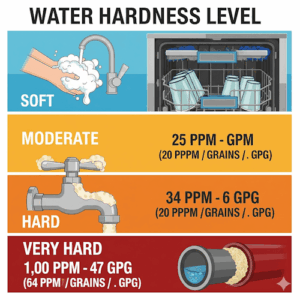
Hardness levels typically fall like this:
| Hardness Level | Grains Per Gallon (GPG) | Description |
| 0–3 | Soft | No treatment needed |
| 4–7 | Moderately hard | May benefit from softening |
| 8–14 | Hard | Softener recommended |
| 15+ | Very hard | Strong softening needed |
Step 2: Estimate Household Water Use
The next factor is how much water your family uses each day. A good rule of thumb is about 75 gallons per person per day. Of course, this varies if you have heavy water use, like frequent laundry, long showers, or outdoor irrigation.
Example:
- A family of four = 4 people x 75 gallons = 300 gallons per day.
Step 3: Multiply Hardness by Daily Use
Now multiply your daily water use by the hardness level to find out how many grains of hardness need to be removed each day.
Example:
- Hardness = 10 GPG
- Daily water use = 300 gallons
- 10 x 300 = 3,000 grains per day
Step 4: Factor in Iron (if applicable)
If you have iron in your water, add it to the hardness number. Each 1 part per million (ppm) of iron is roughly equal to 3–5 grains of hardness.
Example:
- Hardness = 10 GPG
- Iron = 2 ppm (x 4) = 8 additional grains
- Adjusted hardness = 18 GPG
Step 5: Find Weekly Total
Most water softeners are designed to regenerate about once per week. Multiply your daily grains by 7 to find your weekly demand.
Example:
- Daily = 3,000 grains
- Weekly = 3,000 x 7 = 21,000 grains
This means you’d need a water softener with a capacity of at least 21,000 grains.
Step 6: Match to a Standard Size
Water softeners are commonly sold in these sizes:
| Softener Size | Grain Capacity | Suitable Household Size |
| 24,000 grains | Small homes (1–2 people) | |
| 32,000 grains | Average homes (2–3 people) | |
| 48,000 grains | Medium homes (3–5 people) | |
| 64,000 grains | Larger homes (5–7 people) | |
| 80,000+ grains | Very large homes or commercial use |
In the example above (21,000 weekly grains), a 24,000-grain unit would be appropriate.
Common Mistakes to Avoid When Choosing a Size
Even with the math in hand, many homeowners make mistakes that can affect performance and costs. Let’s go through the most common pitfalls so you can avoid them.
Choosing Based on Number of Bathrooms Only
Some people assume the number of bathrooms determines the softener size. While it does give a rough idea of water use, it’s not accurate enough. Two households with three bathrooms could have very different water demands depending on family size and habits.
Going Too Small
If you pick a softener that’s too small, here’s what can happen:
- It regenerates too often, wasting water and salt.
- The system wears out faster.
- You may notice hard water slipping through between cycles.
Going Too Large
A larger unit isn’t always better. Oversized softeners can:
- Cost more up front.
- Waste salt during regeneration.
- Sit idle too long between cycles, which can affect resin performance.
Ignoring Iron and Other Minerals
If your water has iron, manganese, or other minerals, you can’t just size based on hardness alone. Failing to adjust for these factors means your softener won’t perform as expected.
Forgetting Efficiency
Modern softeners vary in how efficiently they use salt and water during regeneration. Two units of the same size may perform very differently in terms of operating costs.
Tips for Making the Best Choice
Once you’ve done the math and know your capacity needs, a few extra tips can help you make the best decision.
Look at Regeneration Frequency
The sweet spot is usually regenerating every 7 days. If your calculations show the unit would regenerate more often, consider a larger size. If it would regenerate less often than once every two weeks, you might be going too large.
Consider Your Water Source
- City water: Often has consistent hardness and little iron, making sizing straightforward.
- Well water: Can vary in hardness, iron, and other minerals, so sizing may require more adjustments.
Think About Future Needs
If your family is growing, or if you plan to add appliances that use more water, it might make sense to size up slightly to accommodate future demand.
Compare Salt Efficiency
Check the manufacturer’s specifications for salt efficiency. A unit that uses less salt per regeneration can save money over time, even if the upfront cost is higher.
Professional Advice
Even if you do your own calculations, it never hurts to get a second opinion from a professional installer. They can test your water and recommend the right unit based on experience.
FAQs About Water Softener Sizing
How do I know if my current softener is too small?
If your system regenerates every couple of days, or if you still notice hard water issues (like spots on dishes or stiff laundry), your unit may be undersized.
Can I oversize my water softener on purpose?
Yes, but only slightly. Oversizing too much leads to inefficiency. A small buffer is fine, but doubling your actual need is not recommended.
How long should a water softener last?
Most quality units last 10–15 years with proper maintenance. Choosing the right size helps extend its lifespan.
Do I always need a professional water test?
Not always. A home test kit is often accurate enough, but if you have well water with multiple contaminants, professional testing is worth it.
What’s the difference between single-tank and dual-tank systems?
Dual-tank systems provide soft water continuously, even during regeneration, and may be a better fit for very large households. However, sizing calculations remain the same.
Conclusion
Choosing the right size water softener is all about matching your household’s water hardness and usage with the system’s capacity. By testing your water, calculating your daily and weekly needs, and comparing those numbers with standard softener sizes, you can make a smart, efficient choice. Avoiding common mistakes—like choosing based only on bathrooms or ignoring iron content—ensures your softener runs smoothly for years.
The best size isn’t always the biggest or most expensive. It’s the one that fits your home, your habits, and your water. With the right system in place, you’ll enjoy the benefits of soft water—better tasting drinks, longer-lasting appliances, softer laundry, and smoother skin—without unnecessary costs or hassles.
Recommended Reading
Finding the Best Water Softener for Well Water in 2025: The Ultimate Guide
Unlock the Secret to Pure, Soft Well Water Discover the best water softener for your well, ensuring pristine water quality. Learn how to effectively combat hard water issues and their consequences. Save money and time by choosing the right softener for your needs. Improve the lifespan of your appliances and plumbing system. Enjoy the benefits […]
The Truth About Salt-Free Water Softeners: Pros and Cons
Unlock the Truth About Salt-Free Water Softeners Discover the pros and cons of salt-free water softener systems. Learn how salt-free softeners work and their effectiveness. Understand if a salt-free system is the right choice for your home. Explore the environmental impact and cost-effectiveness of salt-free options. Compare salt-free softeners to traditional salt-based systems. When it […]
Recommended Reading
Finding the Best Water Softener for Well Water in 2025: The Ultimate Guide
Unlock the Secret to Pure, Soft Well Water Discover the best water softener for your well, ensuring pristine water quality. Learn how to effectively combat hard water issues and their consequences. Save money and time by choosing the right softener for your needs. Improve the lifespan of your appliances and plumbing system. Enjoy the benefits […]
The Truth About Salt-Free Water Softeners: Pros and Cons
Unlock the Truth About Salt-Free Water Softeners Discover the pros and cons of salt-free water softener systems. Learn how salt-free softeners work and their effectiveness. Understand if a salt-free system is the right choice for your home. Explore the environmental impact and cost-effectiveness of salt-free options. Compare salt-free softeners to traditional salt-based systems. When it […]
Leave a Reply